Skip to content
  • Home
  • AHSA
    • AHSA Inc. Meetings
    • AHSA Inc
      • AGM 2022
    • AHSA (NSW) Inc.
    • AHSA (QLD) Inc.
    • Privacy Policy
    • Disclaimer
  • Publications
    • Aviation Heritage
    • Aviation Heritage Web Archive
    • AHSA Newsletter Archive
  • Members
    • Members Only
  • Books
  • Join
  • Links
  • Store
  • Log In
    • My Membership Account
Aviation Historical Society of Australia
  • Home
  • AHSA
    • AHSA Inc. Meetings
    • AHSA Inc
      • AGM 2022
    • AHSA (NSW) Inc.
    • AHSA (QLD) Inc.
    • Privacy Policy
    • Disclaimer
  • Publications
    • Aviation Heritage
    • Aviation Heritage Web Archive
    • AHSA Newsletter Archive
  • Members
    • Members Only
  • Books
  • Join
  • Links
  • Store
  • Log In
    • My Membership Account

Outlook AHSA Newsletter December 2024

DerekB30/12/202431/12/2024
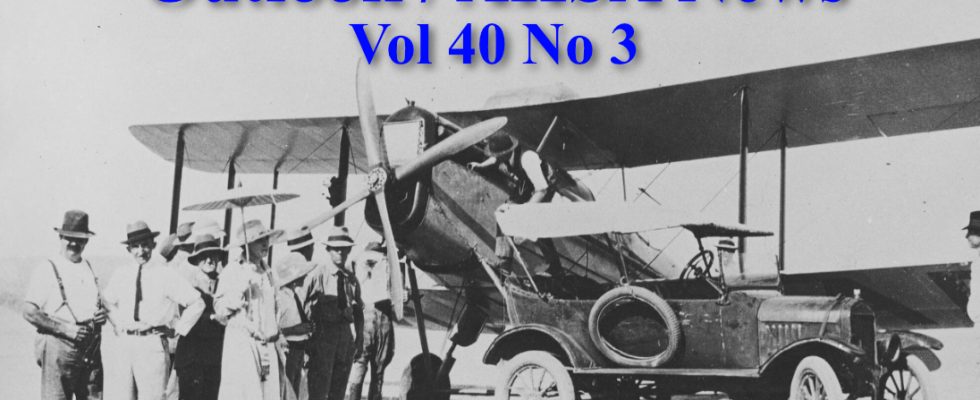
Cover splash image for Outlook AHSA Newsletter Vol 40 No 3

The December 2024 edition of Outlook / AHSA News was distributed to members recently.

This edition can be read online in the viewer below.

Click here to view fullscreen (opens in new tab)
Skip to PDF content


  • Twitter
  • Facebook
  • Google+
  • Linkedin
  • Email
Posted inNewsletter
Tagged Ansett Flying Boat ServicesBrinsmeadCyclone TracyDH.50Duigan Memorial Lecture

Welcome to the website of the Aviation Historical Society of Australia Inc.
The AHSA is dedicated to recording and promoting Australian aviation history. We find and tell the stories of how aviation (both civil and military) has contributed to the development of Australia and the experiences of Australian people.
To navigate around the site, select from the menu bar above, click on one of the updates below or choose one of the categories below.

On this day in Australian aviation history:

1936 Tugan LJW.7 Gannet VH-UUZ operated by Western and Southern Provincial Airlines Ltd crashed at Cordeaux Dam, NSW on 19 February 1936. The aircraft was a substitute for the usual Codock aircraft which would normally have made the flight from Leeton to Sydney. However the Codock suffered engine trouble and landed at Young. The Gannet was bringing the 4 passengers from Young to Sydney. There were 5 fatalities and the aircraft was written off. Sources: aviation-safety.net website; National Archives of Australia, MP187/4, 156, The Sun News-Pictorial 20/02/1936
1937 Stinson Model A VH-UHH "Brisbane" operated by Airlines of Australia crashed on the Lamington Plateau in the McPherson Ranges, Queensland on 19 February 1937. The aircraft was on a flight from Archerfield, Brisbane to Sydney via Lismore. The aircraft was under the command of pilot Captain Rex Boyden and first officer B. Shepherd. There were 4 fatalities in the crash and the aircraft was written off. Three people survived the crash, two of them (John Proud and J.R. Binstead) were found 10 days after the crash. The third survivor (James Westray) went in search of help but died shortly afterwards. Initial search efforts were concentrated along the southern half of the route, because of poor weather in the Lismore area. The wreckage was eventually found by Bernard O'Reilly based on sightings by a friend. Sources: monumentaustralia.org.au website; aviation-safety.net website; Parnell, N. and Boughton, T., Flypast, A Record of Aviation in Australia, Australian Government Publishing Service, Canberra, 1988, p. 165
1942 At 9.58 am on this 19 February 1942 Darwin was bombed by 188 Japanese aircraft operating from the 21st Air Flotilla base at Kendari in the Celebes and from four of Vice Admiral Chuichi Nagumo’s fleet aircraft carriers in the Timor Sea. The Japanese carriers struck at Darwin while on the way from Palau to attack the British naval base at Colombo in Ceylon (now Sri Lanka). Father John McGrath at the Bathurst Island mission north of Darwin observed the Japanese aircraft passing overhead and radioed a warning to RAAF Operations at Darwin at 9.37 am, but his warning was not passed on by the RAAF to the 2,000 inhabitants of Darwin or the numerous naval and merchant ships in the harbour. The first notice of the Japanese attack received by the hapless citizens of Darwin was the terrifying sound of falling bombs. Within two hours of the first attack, Japanese aircraft struck Darwin again. Heavy damage was inflicted on the town, shipping in the harbour, and the RAAF airfield in the two initial air raids on 19 February. Eight ships were sunk in the harbour and many were damaged. A Japanese dive bomber attacked and severely damaged the clearly marked hospital ship Manunda. Nineteen Allied warplanes were destroyed on the ground at the RAAF base and civilian airstrip, including six front-line American P40 fighters. Four American P40s had been on patrol over Darwin. They were taken by surprise by Japanese Zero fighters and shot down. The Darwin post office took a direct hit from a bomb which killed 10 civilian employees. Two hundred and forty-three people were killed at Darwin on 19 February, and 300 were wounded. It was the heaviest loss of life on Australian soil since European settlement in 1788, and the first time that an enemy nation had attacked the Australian mainland. Although the bombing of Darwin was front page news in Australia next day, the full extent of the damage and loss of life was not revealed by the Curtin government. Source: pacificwar.org.au website
1948 Avro Lincoln B Mk 30 A73-11 operated by 21 Sqn RAAF crashed while landing at RAAF Amberley, Queensland on 19 February 1948. There were 16 fatalities and the aircraft was written off. The investigation into the tragedy determined that the probable cause was a mal-distribution of the load, placing the C of G outside the approved aft limit. Sources: adf-serials.com.au and aviation-safety.net websites
1990 The well-known Australian businessman, Mr Dick Smith, was appointed Chairman of the Civil Aviation Authority. His appointment was announced on this date by the Minister for Transport and Communications, Ralph Willis. Mr Smith replaced the late Mr Alan Woods, AO. Dick Smith was a leading figure in aviation circles. He held both fixed wing and helicopter licences in Australia and the US. In 1983 he became the first helicopter pilot to fly solo around the world and in 1987 he made the first helicopter flight to the North Pole. Source: Australian Parliamentary Library

Ansett Flying Boat Services Ballarat Beaufighter Bellanca 28/70 Bill Bedford Boeing Brinsmead Bronco CAC CAC Boomerang CAC Ceres CAC Mustang CAC Wackett Trainer CAC Wirraway CAC Woomera Chartair Cyclone Tracy DAP DC-3 DCA DH.50 DH60 Moth Duigan Memorial Lecture Eric Bonar Essington Lewis Eyre Peninsula Airways GAF Guinea Airways Halestorm JC Fitzmaurice Junkers F13 Lawrence Wackett Macchi Meteor Michael Smith Outlook Percival Proctor Qantas RAF 205 Squadron RFD Winged Target Roy Goon Sid Marshall Smithy (movie) Supermarine Southampton Target towing

Site Categories:

  • AHSA Info
  • AHSA Journal
  • AHSA Meetings
  • AHSA Videos
  • Archives
  • Aviation history books
  • CAC
  • Events
  • Newsletter

Privacy Policy

Contact Us

Home

Copyright © 2025 Aviation Historical Society of Australia Inc.