Skip to content
  • Home
  • AHSA
    • AHSA Inc. Meetings
    • AHSA Inc
      • AGM 2022
    • AHSA (NSW) Inc.
    • AHSA (QLD) Inc.
    • Privacy Policy
    • Disclaimer
  • Publications
    • Aviation Heritage
    • Aviation Heritage Web Archive
    • AHSA Newsletter Archive
  • Members
    • Members Only
  • Books
  • Join
  • Links
  • Store
  • Log In
    • My Membership Account
Aviation Historical Society of Australia
  • Home
  • AHSA
    • AHSA Inc. Meetings
    • AHSA Inc
      • AGM 2022
    • AHSA (NSW) Inc.
    • AHSA (QLD) Inc.
    • Privacy Policy
    • Disclaimer
  • Publications
    • Aviation Heritage
    • Aviation Heritage Web Archive
    • AHSA Newsletter Archive
  • Members
    • Members Only
  • Books
  • Join
  • Links
  • Store
  • Log In
    • My Membership Account

Tag: DAP

DerekB22/03/202321/05/2024

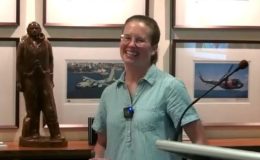
AHSA Melbourne Meeting March 2023 (Annie Floodin: Boeing History)

Our March 2023 Melbourne meeting featured a presentation by Annie Floodin, a historian from Boeing Historical Services who is currently visiting Australia connecting with...

Welcome to the website of the Aviation Historical Society of Australia Inc.
The AHSA is dedicated to recording and promoting Australian aviation history. We find and tell the stories of how aviation (both civil and military) has contributed to the development of Australia and the experiences of Australian people.
To navigate around the site, select from the menu bar above, click on one of the updates below or choose one of the categories below.

On this day in Australian aviation history:

1941 RAAF Base Williamtown was formed on 15 February 1941 to provide protection for the strategic port and steel manufacturing facilities of Newcastle and the Hunter Region. The base was initially served by four runways, each 1,100 m (3,600 ft) in length to meet the needs of the Williamtown Flying School. The School consisted of 62 buildings which accommodated 366 officers and men. Located 30 kilometres north of Newcastle on the lands of the Worimi people, RAAF Base Williamtown is Australia’s premier fighter pilot training base and this will continue with the introduction of the F-35A Lightning II aircraft. Source: airforce.gov.au website
1944 Number 7 Operational Training Unit was formed at RAAF Station Tocumwal on 15 February 1944. The RAAF's first heavy bomber training unit was formed with an initial establishment of 473 personnel and 9 aircraft, Consolidated B-24 Liberators. This would grow to over 2,100 personnel and over 70 aircraft by mid-1945. Over the next 18 months, 7 OTU would train over 4,000 aircrew and 2,000 ground crew. Known primarily for the iconic B-24 Liberator, 7 OTU would also operate other aircraft including P-40 Kittyhawks for fighter affiliation, Vultee Vengeances for target towing and Airspeed Oxfords for transport and training. 7 OTU would become the largest and most significant of all Operational Training Units operated by the RAAF during World War 2. Source: Tocumwal Aviation Museum
1970 Commonwealth Aircraft CA-18 Mk 22 Mustang VH-DBB operated by Mr Don Busch crashed at Welford Forest, near Bendigo, Victoria on 15 February 1970. The aircraft was taking part in an air show being held at Bendigo airport for the official opening of the aerodrome. Although arrangements had been made for the pilot to "fly past", the pilot made two low passes along the runway and after being requested to perform a third low pass, pilot lost control of the Mustang in a steep turn, and spun into the ground. Owner and pilot Don Busch was killed. Upon reaching a height of approximately 1,500 feet, and when in a nose high attitude and probably at a low airspeed, the aircraft entered a very steeply banked turn to the right. Almost immediately, the aircraft flick rolled several times to the right, then adopted a steep nose down attitude together with a rapidly descending, tight, spiral flight path which it maintained until it struck the ground. There was an intense fire which virtually consumed the wreckage. The examination of the wreckage was limited by the destruction but it was established that the engine was delivering considerable power at impact. The possibility that the pilot became incapacitated in flight was considered but rejected on the basis of the medical and operational evidence. The probable cause of the accident was that the pilot, who was inexperienced on the aircraft type (25 hours on type), attempted a manoeuvre in which his capacity to control the aircraft was exceeded. Source: atsb.gov.au website

Ansett Flying Boat Services Ballarat Beaufighter Bellanca 28/70 Bill Bedford Boeing Brinsmead Bronco CAC CAC Boomerang CAC Ceres CAC Mustang CAC Wackett Trainer CAC Wirraway CAC Woomera Chartair Cyclone Tracy DAP DC-3 DCA DH.50 DH60 Moth Duigan Memorial Lecture Eric Bonar Essington Lewis Eyre Peninsula Airways GAF Guinea Airways Halestorm JC Fitzmaurice Junkers F13 Lawrence Wackett Macchi Meteor Michael Smith Outlook Percival Proctor Qantas RAF 205 Squadron RFD Winged Target Roy Goon Sid Marshall Smithy (movie) Supermarine Southampton Target towing

Site Categories:

  • AHSA Info
  • AHSA Journal
  • AHSA Meetings
  • AHSA Videos
  • Archives
  • Aviation history books
  • CAC
  • Events
  • Newsletter

Privacy Policy

Contact Us

Home

Copyright © 2025 Aviation Historical Society of Australia Inc.