Skip to content
  • Home
  • AHSA
    • AHSA Inc. Meetings
    • AHSA Inc
      • AGM 2022
    • AHSA (NSW) Inc.
    • AHSA (QLD) Inc.
    • Privacy Policy
    • Disclaimer
  • Publications
    • Aviation Heritage
    • Aviation Heritage Web Archive
    • AHSA Newsletter Archive
  • Members
    • Members Only
  • Books
  • Join
  • Links
  • Store
  • Log In
    • My Membership Account
Aviation Historical Society of Australia
  • Home
  • AHSA
    • AHSA Inc. Meetings
    • AHSA Inc
      • AGM 2022
    • AHSA (NSW) Inc.
    • AHSA (QLD) Inc.
    • Privacy Policy
    • Disclaimer
  • Publications
    • Aviation Heritage
    • Aviation Heritage Web Archive
    • AHSA Newsletter Archive
  • Members
    • Members Only
  • Books
  • Join
  • Links
  • Store
  • Log In
    • My Membership Account

Tag: CAC Boomerang

DerekB09/03/202609/03/2026

Outlook AHSA Newsletter February 2026

The AHSA newsletter, Outlook, is back - with a new editor, Jarryd Cripps. The February 2026 edition of Outlook / AHSA News was distributed...
DerekB30/09/202319/11/2023

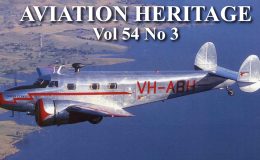
Aviation Heritage Vol. 54 No. 3 (September 2023) Contents Listing

The latest quarterly AHSA journal – Aviation Heritage – has recently been posted to members. The contents of all articles are listed below: Aviation...
DerekB30/11/202223/11/2024

Australian aviation history digital archive

In its mission to preserve and promote Australia's aviation heritage, the AHSA hosts the following digital archives. Click on the image to go to...
DerekB27/04/202204/06/2023

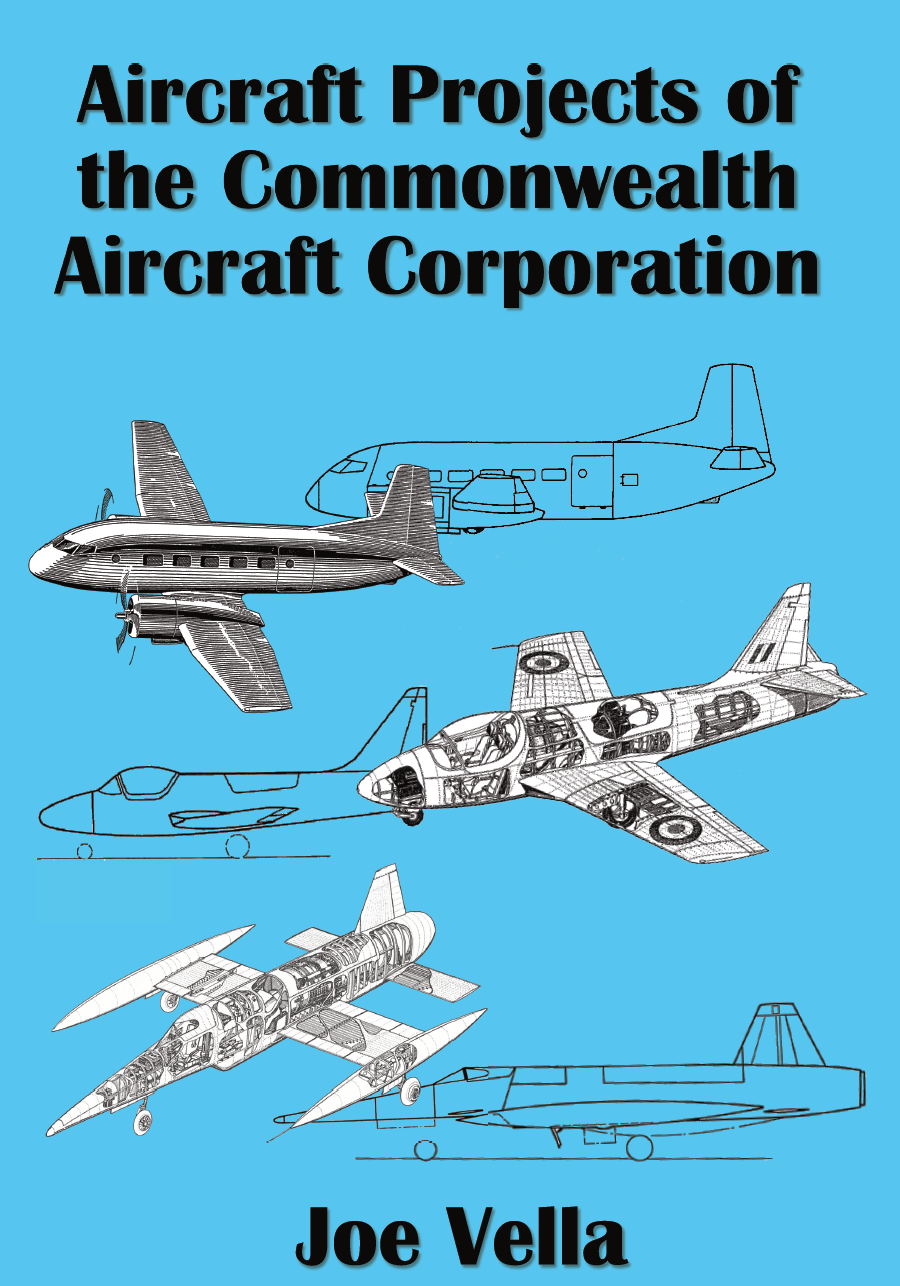
The Aircraft Projects of Commonwealth Aircraft Corporation

This new book by author and AHSA member Joe Vella has just been published (April 2022). Joe began writing this book in 1983 when...
DerekB29/09/202027/12/2022

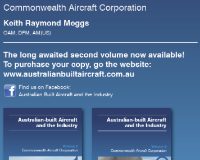
Australian-built Aircraft and the Industry (Vol 2) by Keith Meggs

The latest book released by author Keith Meggs Volume 2 of this encyclopaedic work (containing only one chapter, being chapter 15, spread across two...

Welcome to the website of the Aviation Historical Society of Australia Inc.
The AHSA is dedicated to recording and promoting Australian aviation history. We find and tell the stories of how aviation (both civil and military) has contributed to the development of Australia and the experiences of Australian people.
To navigate around the site, select from the menu bar above, click on one of the updates below or choose one of the categories below.

On this day in Australian aviation history:

1929 After a forced landing west of Wyndham, WA, Charles Kingsford Smith, Charles Ulm, Harold Litchfield and Tom McWilliams were stranded for a third day on Tuesday 2 April 1929. Ulm recorded the following in his log: "Tuesday morning: All visibly weaker; with any exertion we tire out altogether. Smithy and Litchfield left at 6.45 for the hill top where they will light fires. Mac and myself have a fire going near the Southern Cross and will stay here tonight and listen on the radio again. A plane coming is our best hope. We feel we can last for a week if the flies and mosquitoes don't devour us or poison us, but the main thing is the Southern Cross is undamaged and we can take off in a few days if there is no more rain and we may see the mission from the air. We will be able to stay about 15 minutes only, but can send a radio on a short wave from the air, although another landing here will be perilous. Even writing is an effort. At noon: Smithy and Litchfield returned from the hill top; they could not stick the heat without protection. Got Sydney again on a radio tonight, but although we are reported still missing in the press reports there was no direct message to us. There were thunderstorms before sundown and another about 1.30 a.m. All had the best sleep so far, about three hours each. Mac is a scream, making jokes most of the time. Some times he plays his mouth organ. Food is all we need and we can stick it out indefinitely, but all are very weak for lack of food and sleep. Have tried to shoot birds with the auto., but met with no success." Newspapers reported that there was a "veil of silence" from the missing aircraft, and indeed the aircraft radio had been impaired while it was flying since the trailing antenna had unwound and snapped off when Hal Litchfield accidentally and unknowingly bumped the brake on the aerial reel. An Airlines of Western Australia deHavilland DH.50A, G-AUEL, piloted by Captain James Woods, chartered by two newspapers, departed from Fitzroy Crossing at 7:45am local time on 2 April heading for Wyndham to commence a search for the Southern Cross and its crew. This forced landing and its consequences became known as the "Coffee Royal" affair. Sources: Parnell, N. and Boughton, T., Flypast, A Record of Aviation in Australia, Australian Government Publishing Service, Canberra, 1988; Morning Bulletin (Rockhampton, Qld), Mon 15 Apr 1929, Page 9, "LIEUTENANT ULM'S LOG"
1969 UH-IB Iroquois A2-386 of 5 Squadron RAAF crashed in the Captain's Flat area on On 2 April 1969, the accident site being within two miles of the previous crash of A2-719. Preliminary reports indicated that the helicopter suffered an in-flight structural break-up. Both occupants of the aircraft, PLTOFF E. Collett (pilot) and FLGOFF I. McLean, were killed in the crash. The helicopter was participating in a line astern formation flying exercise with another helicopter, which was leading. The exercise included a series of climbing or descending turns to port and starboard. The pilot was new to this exercise, as was his companion, who was not participating as a pilot, but merely observing the manouvres. As a result of these two accidents, the RAAF grounded the Iroquois aircraft until the cause of the accidents had been established. A rigorous examination of the wreckage of both aircraft failed to find any indication of pre-crash effects, which could have contributed to the accidents. Similarly there was no evidence to suggest that the primary cause of the accidents was a sudden catastrophic failure in the engineering of the aircraft. Accordingly, it was concluded that the accidents resulted from violent mast bumping, but the reason for this could not be established. This investigation was led by the Aeronautical Research Laboratories, assisted by two senior accident investigators from the US Army and three experienced engineers from the manufacturer. They fully supported, indeed encouraged, the ARL conclusion. However following an investigation into the similar crash of A2-1023 12 years later, it was realised that the cause of the crash was more likely to have been due to control cables for the tail rotor coming into contact with the tail rotor drive shaft. Sources: ADF-Serials; Aviation Heritage Volume 45 Number 1

A Mouse At Moresby Ansett Airways Ansett Flying Boat Services Ballarat Bellanca 28/70 Bill Bedford Boeing Brinsmead Bronco CAC CAC Boomerang CAC Ceres CAC Mustang CAC Wackett Trainer CAC Wirraway CAC Woomera Chartair Cyclone Tracy DAP DC-3 DCA DH.50 DH60 Moth Double Sunrise Duigan Memorial Lecture Eric Bonar Essington Lewis Eyre Peninsula Airways GAF Guinea Airways Halestorm JC Fitzmaurice Junkers F13 Lawrence Wackett Macchi Meteor Michael Smith Outlook Percival Proctor Qantas RAF 205 Squadron RFD Winged Target Roy Goon Sid Marshall Target towing

Site Categories:

  • AHSA Info
  • AHSA Journal
  • AHSA Meetings
  • AHSA Videos
  • Archives
  • Aviation history books
  • CAC
  • Events
  • Newsletter

Privacy Policy

Contact Us

Home

Copyright © 2025 Aviation Historical Society of Australia Inc.