Skip to content
  • Home
  • AHSA
    • AHSA Inc. Meetings
    • AHSA Inc
      • AGM 2022
    • AHSA (NSW) Inc.
    • AHSA (QLD) Inc.
    • Privacy Policy
    • Disclaimer
  • Publications
    • Aviation Heritage
    • Aviation Heritage Web Archive
    • AHSA Newsletter Archive
  • Members
    • Members Only
  • Books
  • Join
  • Links
  • Store
  • Log In
    • My Membership Account
Aviation Historical Society of Australia
  • Home
  • AHSA
    • AHSA Inc. Meetings
    • AHSA Inc
      • AGM 2022
    • AHSA (NSW) Inc.
    • AHSA (QLD) Inc.
    • Privacy Policy
    • Disclaimer
  • Publications
    • Aviation Heritage
    • Aviation Heritage Web Archive
    • AHSA Newsletter Archive
  • Members
    • Members Only
  • Books
  • Join
  • Links
  • Store
  • Log In
    • My Membership Account

Tag: Ansett Flying Boat Services

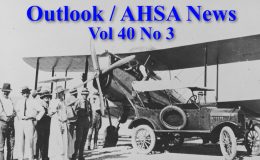
Cover splash image for Outlook AHSA Newsletter Vol 40 No 3
DerekB30/12/202431/12/2024

Outlook AHSA Newsletter December 2024

The December 2024 edition of Outlook / AHSA News was distributed to members recently. This edition can be read online in the viewer below....

Welcome to the website of the Aviation Historical Society of Australia Inc.
The AHSA is dedicated to recording and promoting Australian aviation history. We find and tell the stories of how aviation (both civil and military) has contributed to the development of Australia and the experiences of Australian people.
To navigate around the site, select from the menu bar above, click on one of the updates below or choose one of the categories below.

On this day in Australian aviation history:

1942 No. 455 Squadron RAAF was transferred from Bomber Command to Coastal Command on 26 April 1942. The squadron operated Handley Page Hampden I aircraft.
1943 No. 79 Squadron RAAF was formed at Laverton, Victoria, on 26 April 1943. The squadron received its first Spitfire VC aircraft a month later, when it was ordered to deploy to Goodenough Island, off New Guinea’s east coast. The advance party from the squadron left Australia in mid-May, while the pilots and aircraft followed in early June. Unfortunately, the squadron soon experienced its first fatality when Flying Officer Virgil Paul Brennan DFC DFM died on 13 June from injuries sustained in an accident at Cairns. Brennan had served at Malta during the height of air fighting over that island. The squadron was operational by 26 June. The Spitfires redeployed to Kiriwina Island on 18 August and the squadron operated under adverse conditions alongside 76 Squadron from the northern end of the airstrip. Source: Spitfire Association
1958 On 26 April 1958, 40,000 people flocked to Adelaide Airport to witness Air Marshall Sir Richard Williams officially open the Sir Ross and Sir Keith Smith Memorial and unveil the John Dowie sculpture of the four Vimy crew members. Sir Keith had died of cancer in December 1955 (only months after writing to Prime Minister Menzies about the Vimy) so Wally Shiers was the only surviving Vimy crew member at the opening. Sir Keith’s widow Lady Anita Smith was also a guest of honour. Sir Richard, who had been Ross Smith’s commanding officer with No. 1 Squadron, Australian Flying Corps during WWI, described the aviator as a “most meticulous” pilot. “Had Ross not died so tragically in 1922 I have no doubt he would have made an even greater contribution to aviation,” he said. The then Premier Sir Thomas Playford described the memorial as a “fitting commemoration of one of the greatest achievements of SA’s sons”. He continued: It is fitting that the site chosen for the memorial is the centre of aerial activities of civil aviation in SA, where every person who today enjoys the great advantages of modern transport can stop for a moment and ponder on those who contributed to them. Source: History SA
1998 Cessna 210R VH-IOR crashed at Mount Jagungal, Kosciuszko National Park, 16 km west of Eucumbene, NSW on 26 April 1998. The aircraft was on a flight from Merimbula to Albury. The ATSB noted the following significant factors: 1. The planned route was over mountainous terrain, in adverse weather conditions, and at an altitude above the forecast freezing level. 2. Moderate to severe turbulence had been forecast in the vicinity of the Snowy Mountain ranges and the meteorological conditions were conducive to the formation of mountain waves. 3. At the time radar contact with the aircraft was lost, the pilot was attempting to climb the aircraft to an altitude of 10,000 ft and appeared to be flying it at a lower than normal climb speed. The reason for the observed loss of climb performance as the aircraft approached 9,000 ft could not be positively determined. 4. The aircraft impacted the ground in an attitude consistent with a loss of control. The reason for the loss of control could not be established. There were 6 fatalities. Sources: ATSB aviation-safety.net website

A Mouse At Moresby Ansett Airways Ansett Flying Boat Services Ballarat Bellanca 28/70 Bill Bedford Boeing Brinsmead Bronco CAC CAC Boomerang CAC Ceres CAC Mustang CAC Wackett Trainer CAC Wirraway CAC Woomera Chartair Cyclone Tracy DAP DC-3 DCA DH.50 DH60 Moth Double Sunrise Duigan Memorial Lecture Eric Bonar Essington Lewis Eyre Peninsula Airways GAF Guinea Airways Halestorm JC Fitzmaurice Junkers F13 Lawrence Wackett Macchi Meteor Michael Smith Outlook Percival Proctor Qantas RAF 205 Squadron RFD Winged Target Roy Goon Sid Marshall Target towing

Site Categories:

  • AHSA Info
  • AHSA Journal
  • AHSA Meetings
  • AHSA Videos
  • Archives
  • Aviation history books
  • CAC
  • Events
  • Newsletter

Privacy Policy

Contact Us

Home

Copyright © 2025 Aviation Historical Society of Australia Inc.