Skip to content
  • Home
  • AHSA
    • AHSA Inc. Meetings
    • AHSA Inc
      • AGM 2022
    • AHSA (NSW) Inc.
    • AHSA (QLD) Inc.
    • Privacy Policy
    • Disclaimer
  • Publications
    • Aviation Heritage
    • Aviation Heritage Web Archive
    • AHSA Newsletter Archive
  • Members
    • Members Only
  • Books
  • Join
  • Links
  • Store
  • Log In
    • My Membership Account
Aviation Historical Society of Australia
  • Home
  • AHSA
    • AHSA Inc. Meetings
    • AHSA Inc
      • AGM 2022
    • AHSA (NSW) Inc.
    • AHSA (QLD) Inc.
    • Privacy Policy
    • Disclaimer
  • Publications
    • Aviation Heritage
    • Aviation Heritage Web Archive
    • AHSA Newsletter Archive
  • Members
    • Members Only
  • Books
  • Join
  • Links
  • Store
  • Log In
    • My Membership Account

Tag: CAC Wirraway

DerekB30/11/202223/11/2024

Australian aviation history digital archive

In its mission to preserve and promote Australia's aviation heritage, the AHSA hosts the following digital archives. Click on the image to go to...
DerekB27/04/202204/06/2023

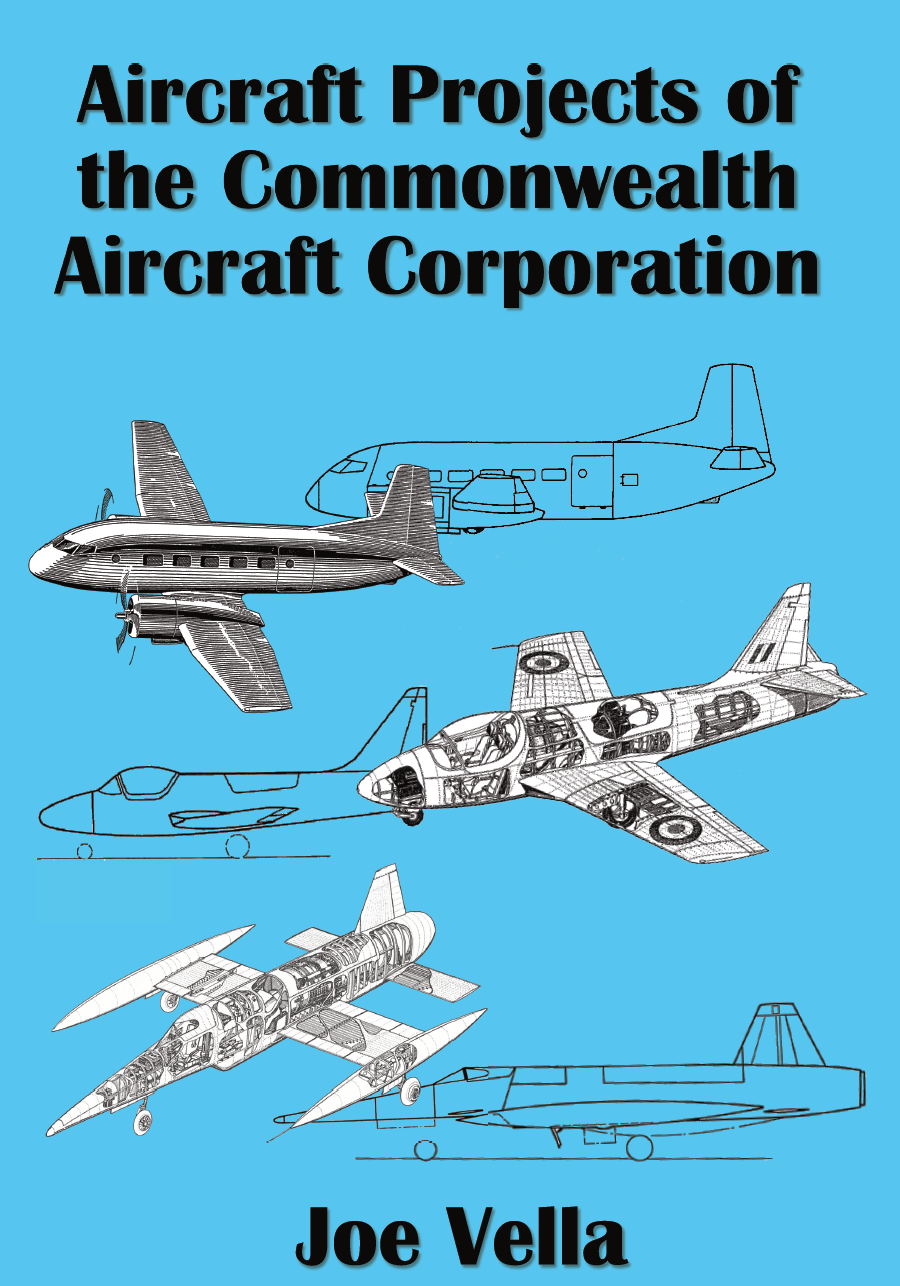
The Aircraft Projects of Commonwealth Aircraft Corporation

This new book by author and AHSA member Joe Vella has just been published (April 2022). Joe began writing this book in 1983 when...
DerekB29/09/202027/12/2022

Australian-built Aircraft and the Industry (Vol 2) by Keith Meggs

The latest book released by author Keith Meggs Volume 2 of this encyclopaedic work (containing only one chapter, being chapter 15, spread across two...
DerekB16/09/202027/12/2022

AHSA Monthly Meeting 16 Sep 2020 (Derek Buckmaster: The Wirraway “Newspaper War”)

Derek Buckmaster gave a presentation on The Wirraway "Newspaper War". The AHSA September monthly meeting was held online via Zoom. A recording of the...
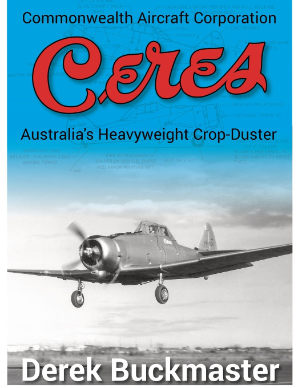
Cover - CAC Ceres by Derek Buckmaster
DerekB08/06/202027/12/2022

CAC Ceres – Australia’s Heavyweight Cropduster by Derek Buckmaster

The Ceres agricultural aircraft was produced by Commonwealth Aircraft Corporation (CAC) in Australia from 1959 to 1963. A total of only 20 airframes were...


Welcome to the website of the Aviation Historical Society of Australia Inc.
The AHSA is dedicated to recording and promoting Australian aviation history. We find and tell the stories of how aviation (both civil and military) has contributed to the development of Australia and the experiences of Australian people.
To navigate around the site, select from the menu bar above, click on one of the updates below or choose one of the categories below.

On this day in Australian aviation history:

1942 Consolidated B-24A Liberator 40-2374 of the 7th Bomb Group / 11th Bombardment Sqadron USAAF was shot down 10 miles off Roebuck Bay, near Broome, Western Australia on 03 March 1942. There were 21 fatalities and the aircraft was written off. At Broome airfield pilot Major Edson Kester was given a list of nineteen evacuees from Java who were to be flown southward to Perth. Among the evacuees was Captain Charles Stafford (7th Bombardment Group medical officer) with wounded under his care. Also, seven ground crew from the 17th Pursuit Squadron including Sgt Beatty and Sgt Donoho. The Liberator took off at 9:23am just prior to the Japanese air raid on Broome. Overloaded, this B-24 struggled to climb to 600' altitude and was attacked by A6M2 Zero piloted by Warrant Officer Osamu Kudo who had just strafed the airfield. Hit in the fuselage fuel tank, the bomber caught fire and crashed into Roebuck Bay roughly 10 miles from shore and 7 miles off Cable Beach. On impact, the fuselage broken into two pieces, the wings separated and the pieces sank within three minutes. Sources: aviation-safety.net website and Pacific Wrecks website
1942 On 3 March 1942 Broome, Western Australia was attached by nine Mitsubishi A6M2 Zeros from the 3rd Kokutai (3rd Air Group) led by a Mitsubishi C5M2 Babs piloted by Akira Hayashi. The Japanese aircraft took off from Keopang Airfield on Timor and arrived over Broome at 9:20am. Six of the Zeros conducted low-level strafing attacks over Broome, Broome Airfield and Roebuck Bay at 500 feet. The other three Zeros provided top cover, and the Babs flew reconnaissance and took photographs during the raid. Prior to the attack, aircraft and people fleeing from Java and the Celebes had arrived in Broome, with Perth as their ultimate destination. This attack resulted in the destruction of 17 aircraft which including Donier Do24 seaplanes, Catalinas, Empire flying boats, Fortresses, Liberators, Hudsons and DC-3s. The only Japanese loss was A6M2 Zero piloted by Warrant Officer Osamu Kudo who was hit by ground fire and crashed into the sea and was never found. Sources: Aviation Heritage Volume 31 Number 3 September 2000; Pacific Wrecks website; Ozatwar.com website
1942 On 3 March 1942, Douglas DC-3 PK-AFV "Pelikaan" of the KNILM (Netherlands East Indies KLM) left Bandung in Java headed for Australia with evacuees and a box of diamonds worth approximately £300,000. This was the last allied flight out of Java, escaping just 3 days before the Japanese took the Bandung area. At about 1:00 am, while the Dakota's engines were being warmed up, the Captain of the Dakota, Ivan "Turc" Smirnoff was handed a sealed cigar-box sized container by Mr. Wisse, the manager of Andir airfield at Bandung. The box was wrapped in brown paper and sealed in many places. Smirnoff was not aware of the contents of the box but was told "Take good care of this, it is quite valuable". He was told that an Australian Bank would take delivery of the box on arrival in Australia. Smirnoff threw the box into the Dakota's First Aid box, taxied the Dakota out to the runway and took off at about 1:15 am local time. Smirnoff had flown several of these evacuation flights to Australia in early 1942, carrying KNILM office staff, ground personnel, some civilians and service personnel. His co-pilot for this flight was Johan "Neef" Hoffman and his radio operator was John "Jo" Muller. Amongst his passengers were five NEI-AF pilots and four civilians, one of which was an 18 month old baby. As they approached Broome just after sunrise, the Dakota's radio officer received a short reply from Broome airfield "Airstrip is okay for the time being" which puzzled the crew of the Dakota. By that time they had reached the Australian coastline north of Broome. As they followed the beaches towards Broome, they observed large black clouds of smoke when they were still about 80 kilometres north of Broome. They had unfortunately arrived at Broome just after a Japanese raid by nine Japanese Mitsubishi A6M2 Zero fighter aircraft and a single Mitsubishi C5M2 Babs command reconnaissance and navigational aircraft of the 3rd Kokutai, IJNAF. Three of the Zeros had stayed at a higher altitude during the raid to act as "top cover" for the other Zeros. As these "top cover" Zeros followed the coastline on the first section of their return flight towards Timor, they encountered the slow-flying Dutch Dakota. The Zeros first attacked the Dakota from the port side, setting the port engine on fire. Captain Smirnoff was wounded several times in his arms and hip. Several passengers were also injured. Smirnoff managed to put the Dakota into a steep spiral dive with the Zeros in pursuit, and landed the aircraft in one piece on the sand at Carnot Bay. Four passengers died from their injuries. The survivors were rescued a week after their crash. The box of diamonds may have been retrieved by local beachcomber Jack Palmer several weeks after the crash. Sources: Aviation Heritage Volume 31 Number 3 September 2000; Pacific Wrecks website; Ozatwar.com website; warhistory online website
1943 On the morning of 3 March 1943 a convoy of Japanese ships, carrying some 6,400 Japanese troops, steaming from Rabaul towards the north coast of New Guinea came under attack by RAAF and USAAF bomber squadrons from Buna, Milne Bay, Port Moresby and Mareeba in an action became known as the Battle of the Bismarck Sea. The first attack was made before dawn by RAAF Beaufort torpedo bombers of 100 Squadron. They did not score any hits but were followed closely by 13 RAAF Beaufighters who inflicted damage with low level straffing runs until B25 Mitchells of the 5th Air Force, USAAF attacked from altitudes of 2,000 to 3,000 feet. The next attack was by more USAAF Mitchells who had been practicing skip-bombing at low level. They claim to have scored 17 hits. Above them heavy B17s bombed the convoys from high altitudes and claimed another five hits. By this time half of the transport ships have been lost or are sinking. In the final phase of the attack twelve A20 Bostons attacked, claiming 11 direct hits, and six B25s reported 4 additional hits. While the attacks on the convoy were occurring other allied aircraft attacked the Japanese airfield at Lae to prevent them providing air cover for the embattled convoy. By the end of the day on 3 March, all eight transport ships had either been sunk or were sinking, as were 3 of the eight destroyers. A Fourth destroyer while floating was significantly damaged. The Australian cinematographer Damien Parer flew in the back seat of a No. 30 Squadron Beaufighter during one of the missions, documenting the battle on film. Sources: Australian War Memorial; Military History & Heritage, Victoria; RAAF
1974 Cessna 150 VH-DFR operated by G.M. Ferguson crashed at Anna Creek Station, South Australia on 03 March 1974. After a short local flight the aircraft returned to the landing area and made a low run, at a height estimated as between 30 and 100 feet, in a south-easterly direction and passed near the group of persons on the ground. This was followed by a run at a similar height in a north-westerly direction and a further similar run to the south-east. Shortly after passing near the group of spectators on the third run, a steep climb was commenced and, at the top of the climb, the left wing dropped until the aircraft was almost inverted, the nose lowered and the aircraft rotated to the left as it dived towards the ground. The rotation appeared to cease just before the aircraft struck the ground in a steep nose down attitude and burst into flames. There were 2 fatalities and the aircraft was written off. Sources: ATSB website; aviation-safety.net website
1975 Beechcraft D55 Baron VH-TYM crashed at Parafield, 18 Km N of Adelaide, South Australia on 3 March 1975. At 1125 hours Central Standard Time the aircraft struck the ground during an attempted 'go-around' from a landing approach at Parafield Airport, South Australia. The aircraft was virtually destroyed by impact forces and subsequent fire and the five occupants were killed. Sources: ATSB website; aviation-safety.net website
1982 Piper PA-31 Navajo VH-CLU operated by Coal Air crashed 800 metres west of Dysart Airport, Dysart, Queensland on 3 March 1982. The aircraft was being operated on a regular freight carrying run between Dysart and Rockhampton. The aircraft departed Rockhampton at 0354 hours. At 0435 hours, the pilot reported that descent had been commenced into Dysart and because of poor reception on High Frequency radio channels further communications with VH-CLU were relayed by another aircraft in the area, VH-EEF on Very High Frequency channels. After communications with VH-CLU, the pilot of VH-EEF advised Brisbane Flight Service Unit (FSU) at 0453 hours, that the runway lighting was not yet displayed. The runway lighting at Dysart was provided by a number of hand-lit flares. The lighting of these flares was carried out by an employee of the company operating VH-CLU, and normally took about ten minutes. On this occasion the employee had overslept and arrived at the aerodrome at about the same time that the aircraft flew overhead. At 0501 hours further attempts by the pilot of VH-EEF and Brisbane FSU to contact VH-CLU were unsuccessful. The wreckage of the aircraft was later located about 800 metres to the west of the aerodrome. The aircraft had struck trees while heading in a direction aligned with runway 14 but displaced to the west of the runway. It had been destroyed as a result of the impact forces. There were 2 fatalities. Sources: ATSB website; aviation-safety.net website
1990 Magna Liset set a record for "Speed over a recognised course" (Powered Aeroplanes, C-1b, Landplanes: take off weight 500 to 1000 kg) of 263.33 km/h on 3 Mar 1990 in a Rutan Long-EZ during a flight from Brisbane to Perth. Source: FAI Records website, ID=12134
1991 Bell 206L-1 LongRanger II VH-TCH operated by Sea World crashed at South Stradbroke Island, Queensland on 03 March 1991. The pilot was conducting a short joy-flight with six passengers from the Sea World complex. About 4 km north of the complex, the helicopter was seen to climb steeply in a near-vertical nose-high attitude. As the helicopter fell backwards from the nose-high attitude, the tail boom was severed by the main rotor blades. The cabin and the separated tail boom fell to ground on the ocean beach of South Stradbroke Island; The main body of the helicopter exploded and caught fire, scattering debris over a wide area. All seven occupants received fatal injuries.. Sources: ATSB website; aviation-safety.net website
2004 The Aviation Transport Security Bills 2003 passed the Senate on 3 March 2004 after review of the regulations by the Rural and Regional Affairs and Transport Legislation Committee. Source: Rural and Regional Affairs and Transport Legislation Committee, 12/03 via aph.gov.au website
2021 A microlight aircraft crashed south of Exmouth, North West Cape, WA on 3 March 2021. The pilot, Mal Watts, and his wife, Samantha Nuttall, failed to return late on Wednesday, the aircraft coming down just kilometres from the town's aerodrome. It had been during a romantic flight above the canyon, which the couple had done many times before, when tragedy struck. There were 2 fatalities. Sources: 9 News website; ABC News website; aviation-safety.net website

Ansett Flying Boat Services Ballarat Beaufighter Bellanca 28/70 Bill Bedford Boeing Brinsmead Bronco CAC CAC Boomerang CAC Ceres CAC Mustang CAC Wackett Trainer CAC Wirraway CAC Woomera Chartair Cyclone Tracy DAP DC-3 DCA DH.50 DH60 Moth Duigan Memorial Lecture Eric Bonar Essington Lewis Eyre Peninsula Airways GAF Guinea Airways Halestorm JC Fitzmaurice Junkers F13 Lawrence Wackett Macchi Meteor Michael Smith Outlook Percival Proctor Qantas RAF 205 Squadron RFD Winged Target Roy Goon Sid Marshall Smithy (movie) Supermarine Southampton Target towing

Site Categories:

  • AHSA Info
  • AHSA Journal
  • AHSA Meetings
  • AHSA Videos
  • Archives
  • Aviation history books
  • CAC
  • Events
  • Newsletter

Privacy Policy

Contact Us

Home

Copyright © 2025 Aviation Historical Society of Australia Inc.