Skip to content
  • Home
  • AHSA
    • AHSA Inc. Meetings
    • AHSA Inc
      • AGM 2022
    • AHSA (NSW) Inc.
    • AHSA (QLD) Inc.
    • Privacy Policy
    • Disclaimer
  • Publications
    • Aviation Heritage
    • Aviation Heritage Web Archive
    • AHSA Newsletter Archive
  • Members
    • Members Only
  • Books
  • Join
  • Links
  • Store
  • Log In
    • My Membership Account
Aviation Historical Society of Australia
  • Home
  • AHSA
    • AHSA Inc. Meetings
    • AHSA Inc
      • AGM 2022
    • AHSA (NSW) Inc.
    • AHSA (QLD) Inc.
    • Privacy Policy
    • Disclaimer
  • Publications
    • Aviation Heritage
    • Aviation Heritage Web Archive
    • AHSA Newsletter Archive
  • Members
    • Members Only
  • Books
  • Join
  • Links
  • Store
  • Log In
    • My Membership Account

Tag: Chartair

DerekB06/03/202303/06/2023

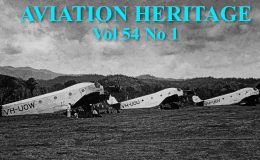
Aviation Heritage Vol. 54 No. 1 (March 2023) Contents Listing

The latest quarterly edition (March 2023) of the AHSA journal – Aviation Heritage – has recently been posted to members. The full contents are...

Welcome to the website of the Aviation Historical Society of Australia Inc.
The AHSA is dedicated to recording and promoting Australian aviation history. We find and tell the stories of how aviation (both civil and military) has contributed to the development of Australia and the experiences of Australian people.
To navigate around the site, select from the menu bar above, click on one of the updates below or choose one of the categories below.

On this day in Australian aviation history:

1919 Captain Henry Wrigley and Sergeant Arthur William Murphy completed the first crossing of the continent of Australia from south to north when they departed from Katherine, Northern Territory and flew to Darwin on Friday 12 December 1919. This was the fourteenth and last leg of an aerial survey of a suitable route from Melbourne to Darwin. Along the route they surveyed landing sites and made descriptions of the terrain over which they flew. They were planning to arrive in Darwin before Ross and Keith Smith, Walter Sheirs and James Bennett who flew from London in the Vickers Vimy G-EAOU but the Vimy arrived in Darwin two days before them. The small landing ground which had been cleared at Katherine needed to be extended to allow the B.E.2e to take off. They flew directly northwards from Katherine to Darwin, a flight of approximately 310km following the overland telegraph and railway line. Source: Tom Lockley, Wrigley and Murphy: Australia’s First Transcontinental Flight; AHSA (NSW) Inc., 2009.
2019 The Civil Aviation Safety Authority announced that a milestone in Australia’s aviation safety regulation development program was reached on 12 December 2019, with the Governor-General’s signing of the final three flight operations Parts of the Civil Aviation Safety Regulations 1998 (CASR). The new CASR Parts streamlined and modernised the rules for sport and recreational aviation, ballooning and parachuting activities in Australia. This substantially completed a program that had begun 25 years earlier, migrating the aviation safety rules to the CASR from the Civil Aviation Regulations 1988 and numerous other instruments. Two years earlier, when CASA had 10 regulations to finalise to complete the CASR suite, Chief Executive Officer/Director of Aviation Safety Shane Carmody made a commitment to industry that the Authority would ‘get them done’. The regulations are part of a suite of nine flight operations regulations that commenced on 25 March 2021, affecting every pilot and air operator in Australia. Source: transparency.gov.au website
2019 The Pilatus PC-9/A aircraft of the RAAF were withdrawn from service on 12 December 2019 after more than 30 years of operations and over 500,000 flying hours since entering service in November 1987. The PC-9/A was replaced by the newer and more capable Pilatus PC-21. Deputy Air Commander Australia, Air Commodore Guy Wilson joined hundreds of personnel and their families from the RAAF, maintenance provider Airflite and representatives from Pilatus at a function and flypast to mark the type’s withdrawal, at RAAF Base Pearce, north of Perth, Western Australia. AIRCDRE Wilson said “The aircraft has successfully supported 103 pilot training courses and graduated more than 1400 pilots from Navy and Air Force. For those who have flown and supported the PC-9 fleet, seeing them retire will be an emotional experience – but the introduction of the PC-21 allows us to deliver modern and effective training that will serve the next generation of pilots." The retired PC-9/A aircraft were allocated as training aids, to heritage centres, or disposed through commercial auctions. Nine PC-9/A aircraft from Number 2 Flying Training School (2 FTS) at RAAF Base Pearce made a final flight formation before retirement. During the flight A23-001, the first PC-9 delivered to the RAAF, suffered a bird strike and had to land early, leaving eight PC-9s to complete the formation flypasts. Source: Department of Defence

Ansett Flying Boat Services Ballarat Beaufighter Bellanca 28/70 Bill Bedford Boeing Brinsmead Bronco CAC CAC Boomerang CAC Ceres CAC Mustang CAC Wackett Trainer CAC Wirraway CAC Woomera Chartair Cyclone Tracy DAP DC-3 DCA DH.50 DH60 Moth Duigan Memorial Lecture Eric Bonar Essington Lewis Eyre Peninsula Airways GAF Guinea Airways Halestorm JC Fitzmaurice Junkers F13 Lawrence Wackett Macchi Meteor Michael Smith Outlook Percival Proctor Qantas RAF 205 Squadron RFD Winged Target Roy Goon Sid Marshall Smithy (movie) Supermarine Southampton Target towing

Site Categories:

  • AHSA Info
  • AHSA Journal
  • AHSA Meetings
  • AHSA Videos
  • Archives
  • Aviation history books
  • CAC
  • Events
  • Newsletter

Privacy Policy

Contact Us

Home

Copyright © 2025 Aviation Historical Society of Australia Inc.