Skip to content
  • Home
  • AHSA
    • AHSA Inc. Meetings
    • AHSA Inc
      • AGM 2022
    • AHSA (NSW) Inc.
    • AHSA (QLD) Inc.
    • Privacy Policy
    • Disclaimer
  • Publications
    • Aviation Heritage
    • Aviation Heritage Web Archive
    • AHSA Newsletter Archive
  • Members
    • Members Only
  • Books
  • Join
  • Links
  • Store
  • Log In
    • My Membership Account
Aviation Historical Society of Australia
  • Home
  • AHSA
    • AHSA Inc. Meetings
    • AHSA Inc
      • AGM 2022
    • AHSA (NSW) Inc.
    • AHSA (QLD) Inc.
    • Privacy Policy
    • Disclaimer
  • Publications
    • Aviation Heritage
    • Aviation Heritage Web Archive
    • AHSA Newsletter Archive
  • Members
    • Members Only
  • Books
  • Join
  • Links
  • Store
  • Log In
    • My Membership Account

Tag: Qantas

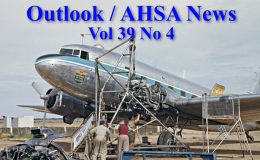
Outlook / AHSA News cover splash Nov 2023
DerekB30/11/202327/12/2023

Outlook AHSA Newsletter November 2023

The November 2023 edition of Outlook / AHSA News was distributed to members recently. This edition can be read online in the viewer below....

Welcome to the website of the Aviation Historical Society of Australia Inc.
The AHSA is dedicated to recording and promoting Australian aviation history. We find and tell the stories of how aviation (both civil and military) has contributed to the development of Australia and the experiences of Australian people.
To navigate around the site, select from the menu bar above, click on one of the updates below or choose one of the categories below.

On this day in Australian aviation history:

1946 No 10 Empire Flying Training School at Temora ceased operation on 12 March 1946. It was the last World War Two flying school to close. Throughout the war more than 10,000 personnel were involved at the school with upwards of 2,400 pilots trained. At its peak the unit contained a total of 97 de Havilland Tiger Moth aircraft. Four satellite airfields were established in the Temora district to cope with the demand to train RAAF pilots. Source: Temora Aviation Museum
1986 The Minister for Transport and Minister for Aviation Mr Peter Morris introduced the Air Navigation Amendment Bill 1986 on 12 March 1986 to ratify the (Chicago) Convention on International Civil Aviation and to give effect to its provisions in Australia. These security changes arose from the Korean Airlines flight 007 case of 31 August 1983. Source: House of Representatives Debates, p.1198. via aph.gov.au website
1990 GAF Nomad A18-401 crashed at Mallala, SA on 12 March 1990. The aircraft suffered an in-flight structural failure of the horizontal stabiliser which resulted in its separation from the body of the aircraft. The aircraft was on a local training flight from Edinburgh Air Force Base. The pilot, FLTLT Glenn Donovan, was killed in the crash. The RAAF Accident Investigation Team found that the separation of the horizontal stabiliser was caused by pre-existing cracks in the spar assembly. They speculated that cracking in the spar assembly had been exacerbated by extensive engine ground running by AeroSpace Technologies of Australia during engine nacelle temperature tests. The Air Commander Australia, AVM I.B. Gration, convened a RAAF Board of Enquiry which concluded (in part) that prior to the accident the tailplane of the aircraft had numerous cracks rendering the aircraft unairworthy; it was probable that the cracks were initiated and propagated by ground running while the aircraft was operated by GAF/ASTA; and despite deficiencies in the acquisition and maintenance process for A18-401, disciplinary action was not warranted. The Senate Foreign Affairs, Defence and Trade References Committee held an inquiry into the response to the accident by the Ombudsman, the RAAF and AeroSpace Technologies of Australia, releasing its findings in April 1996. Source: Australia. Parliament. Senate. Foreign Affairs, Defence and Trade References Committee and Woods, Bob. Crash of RAAF Nomad Aircraft A18-401 on 12 March 1990 [Canberra]: The Parliament of the Commonwealth of Australia, 1996. Web. 12 March 2022 <http://nla.gov.au/nla.obj-2177490640>
1993 The Terrell Report (formally the Report of the Study Group Addressing Concerns Regarding the Operation of the Safety Regulation and Standards Division), released on 12 March 1993, found that general aviation safety standards had fallen under CAA reforms. The CAA Board later accepted all but one of 59 Report recommendations. Mr Ted Butcher stepped down early as Chairman, to be replaced by General Peter Gration with Mr Doug Roser as Chief Executive. Source: Australian Financial Review, 21 July 1994. via aph.gov.au website
1994 Piper PA-23-250 Aztec VH-BOC crashed at Mount Bellenden Ker, Queensland on 12 March 1994. The aircraft was cleared Cairns-Innisfail VFR at 5000 feet, and later reported maintaining 5000 feet. About seven minutes later, radar contact with the aircraft was lost. Attempts to contact the aircraft by radio were unsuccessful. The wreckage of the aircraft was found about one hour later on the 160 radial, 23 DME, on Mt Bellenden Ker at 4200 feet AMSL. There were 4 fatalities and the aircraft was destroyed. Sources: ATSB; aviation-safety.net website
1998 Lancair 320 VH-LPJ crashed 72 km NW of Bundaberg, QLD on 12 March 1998. The aircraft departed from Rockhampton bound for Archerfield. At 1428 Brisbane Flight Service received a Mayday transmission from the aircraft. The pilot indicated that the engine had lost all oil pressure, and that she intended to land on a road. This was the last recorded transmission from the aircraft. The crew of a search aircraft sighted the wreckage at 1815, about 380 m south of a dirt road aligned 080/260 degrees M. The road was new and unusually wide due to the recently constructed clearway through the coastal forest. It had a natural surface and was suitable for an emergency landing. Examination of the accident site revealed that the aircraft struck the ground at an angle of 45-50 degrees nose-down and banked approximately 90 degrees left. There were two fatalities and the aircraft was destroyed. During the investigation of this occurrence, several Lancair and amateur-built aircraft of other types were found with similar non-compliant engine oil hose fittings. The deficiencies found with the engine installations and documented aerodynamic stalling speeds were referred to CASA. In October 1998, CASA issued AD/LYC/86 Amdt 2, to highlight that any replacement of the steel oil line must comply with the Technical Service Order specifying high heat tolerance (Type D) hoses. Sources: ATSB; aviation-safety.net website
1999 In an accident at Melbourne Airport on 12 March 1999, an Ansett Boeing 737 experienced failure of wing and landing components, due to stress corrosion. At the appropriate time during the approach sequence, the co-pilot of the Boeing 737, who was the handling pilot for the sector, called for the landing gear to be extended. When the pilot in command placed the landing gear lever to the "down" position, a loud thump was heard and the "gear safe" green light for the right main gear illuminated immediately. This was followed by the illumination of the left main and nose landing gear lights, consistent with a normal extension sequence. The aircraft rolled approximately 4 degrees to the right while the gear was extending. This was counteracted by a left roll control input. As the crew had received indications that the landing gear was safely locked down, they continued the approach and completed a normal landing. Ramp maintenance staff briefly inspected the aircraft but did not find any immediate cause for the reported thump. The aircraft was then placed on jacks for a retraction test. When the landing gear lever was selected to the "up" position, the right main landing gear moved inboard approximately 15 cm before a grinding noise was heard. The test was immediately suspended and the landing gear was extended. When access panels were removed, it was found that the actuator beam arm inboard lugs and beam hanger had fractured. The rear wing spar, landing gear beam, aileron bus cable, pulley bracket, aileron and spoiler cables and hydraulic lines had been damaged extensively following the fracture of the lugs and hanger. Source: ATSB Investigation Report, 8 Oct. 2001. via aph.gov.au website
2006 Glasair SH-2RG VH-IDF crashed at Mildura Airport, Victoria on 12 March 2006. A Coronial inquest into the accident seven years later found that the pilot was flying with an expired certificate of airworthiness. John Christopher Hender and Samuel Hender, 10, died when the home-made aircraft crashed into a shed in Mildura and burst into flames. Mr Hender had failed to regain altitude after aborting an attempted landing at the nearby airport. He was not allowed to carry passengers unless they were required for testing purposes, but decided to take his son flying on his birthday. The coroner has recommended that children under 17 be prohibited from flying in any aircraft issued with an experimental class of airworthiness certificate. Sources: ABC news website; aviation-safety.net website
2006 Ozjet ceased regular passenger transport flight operations on 12 March 2006. Source: AAP. via aph.gov.au website
2009 The US based Flight Safety Foundation (FSF) absorbed the former local Aviation Safety Foundation Australasia office into a Pacific FSF regional base, its first outside the USA, on 12 March 2009. Source: FSF, Flight Safety Foundation establishes new regional base in Australia, media release, 12 March 2009, Alexandria, Virginia, USA. via aph.gov.au website
2021 The Civil Aviation Safety Authority issued a temporary suspension on Boeing 737 MAX aircraft operating to or from Australia. While no Australian airlines currently operated the Boeing 737 MAX, two foreign airlines flew these aircraft types to Australia before the COVID-19 pandemic – Singapore-based SilkAir (now Singapore Airlines) and Fiji Airways. CASA’s CEO and Director of Aviation Safety, Shane Carmody, said that in light of the two recent fatal accidents, the temporary suspension of Boeing 737 MAX 8 aircraft operations was in the best interests of safety. He said: “This is a temporary suspension while we wait for more information to review the safety risks of continued operations of the Boeing 737 MAX 8 to and from Australia. CASA regrets any inconvenience to passengers but believes it is important to always put safety first.” Source: CASA

A Mouse At Moresby Ansett Airways Ansett Flying Boat Services Ballarat Bellanca 28/70 Bill Bedford Boeing Brinsmead Bronco CAC CAC Boomerang CAC Ceres CAC Mustang CAC Wackett Trainer CAC Wirraway CAC Woomera Chartair Cyclone Tracy DAP DC-3 DCA DH.50 DH60 Moth Double Sunrise Duigan Memorial Lecture Eric Bonar Essington Lewis Eyre Peninsula Airways GAF Guinea Airways Halestorm JC Fitzmaurice Junkers F13 Lawrence Wackett Macchi Meteor Michael Smith Outlook Percival Proctor Qantas RAF 205 Squadron RFD Winged Target Roy Goon Sid Marshall Target towing

Site Categories:

  • AHSA Info
  • AHSA Journal
  • AHSA Meetings
  • AHSA Videos
  • Archives
  • Aviation history books
  • CAC
  • Events
  • Newsletter

Privacy Policy

Contact Us

Home

Copyright © 2025 Aviation Historical Society of Australia Inc.