Skip to content
  • Home
  • AHSA
    • AHSA Inc. Meetings
    • AHSA Inc
      • AGM 2022
    • AHSA (NSW) Inc.
    • AHSA (QLD) Inc.
    • Privacy Policy
    • Disclaimer
  • Publications
    • Aviation Heritage
    • Aviation Heritage Web Archive
    • AHSA Newsletter Archive
  • Members
    • Members Only
  • Books
  • Join
  • Links
  • Store
  • Log In
    • My Membership Account
Aviation Historical Society of Australia
  • Home
  • AHSA
    • AHSA Inc. Meetings
    • AHSA Inc
      • AGM 2022
    • AHSA (NSW) Inc.
    • AHSA (QLD) Inc.
    • Privacy Policy
    • Disclaimer
  • Publications
    • Aviation Heritage
    • Aviation Heritage Web Archive
    • AHSA Newsletter Archive
  • Members
    • Members Only
  • Books
  • Join
  • Links
  • Store
  • Log In
    • My Membership Account

Tag: Roy Goon

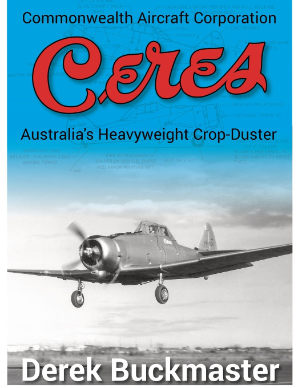
Cover - CAC Ceres by Derek Buckmaster
DerekB08/06/202027/12/2022

CAC Ceres – Australia’s Heavyweight Cropduster by Derek Buckmaster

The Ceres agricultural aircraft was produced by Commonwealth Aircraft Corporation (CAC) in Australia from 1959 to 1963. A total of only 20 airframes were...

Welcome to the website of the Aviation Historical Society of Australia Inc.
The AHSA is dedicated to recording and promoting Australian aviation history. We find and tell the stories of how aviation (both civil and military) has contributed to the development of Australia and the experiences of Australian people.
To navigate around the site, select from the menu bar above, click on one of the updates below or choose one of the categories below.

On this day in Australian aviation history:

1981 Cessna 210M Centurion VH-MDX operated by Colville Aviation Services went missing over Barrington Tops, NSW on 9 August 1981. The aircraft was flying south from Proserpine in Queensland to Sydney, via a fuel stop in Coolangatta. On board were four Sydney men - Noel Wildash; Sydney Water Police deputy chief Ken Price; Rhett Bosler; and Philip Pembroke - who had been sailing a yacht up the Queensland coast and were returning home with the pilot, Michael Hutchins. All was going well until they reached Taree, on NSW's mid-north coast, when Hutchins requested permission to fly through restricted airspace around the Williamtown RAAF base near Newcastle in order to avoid some nasty weather inland. But before permission was granted, Hutchins decided to continue along his original route away from the coast towards Singleton in the Hunter Valley and then on to Sydney's Bankstown airport. From that point, everything that could go wrong did. Sometime after Taree, a vacuum pump failed. The pump powered two vital flight instruments - the artificial horizon and the heading indicator. Instead of flying east of Barrington Tops, Hutchins mistakenly flew west - and then did a U-turn, thinking he was heading for the coast when in fact he was pointing back towards the dense mountain forests. "He's got problems, this boy," the air traffic controller in Sydney remarked to his colleague at Williamtown as they attempted to direct the Cessna to safety, tracking its progress on their radars. The crackly recordings between the pilot and the controllers reveal the horror within the tiny aircraft that day as it was buffeted by wild winds. "We have a little bit of a problem, our standby compass is swinging like blazes"; "We're picking up ice"; "Just to compound things, we thought we had a cockpit fire but we seem to have resolved that little problem"; "We just got caught in a downdraft and we're down a thousand [feet] a minute"; "We're losing a hell of a lot ... we're down to six and a half." The plane was being pounded by turbulence and thick clouds restricted the pilot's view and ability to stay level. Snow was falling on the mountains. The plane lacked the power to punch its way up through the crushing downdrafts. A controller informed the pilot, "your lowest safe [altitude] in that area is six thousand [feet]." Then came the pilot's terrified, high-pitched reply: "Five thousand ... " And that was it - silence. The controllers pleaded into dead air for a response and scanned their radars. Nothing. Other aircraft were diverted to look but there was no sign of fire below. The Cessna's emergency beacon did not activate. The following day, an extensive land and air search was launched involving helicopters, fixed-wing aircraft and hundreds of men on the ground. They could find no signs of scarring to indicate the plane may have ploughed into the forest. After nine days, the search was called off. A month later, another huge ground search, involving 400 police, army reservists and bushwalkers, failed as well. In the years since, dozens, possibly hundreds of official and unofficial searches have been mounted to find VH-MDX. Clairvoyants and psychics have been consulted and found wanting. Two men have written a book on the subject, claiming to have pinpointed the spot. The disappearance of VH-MDX remains Australia's only unsolved aircraft crash since World War II. Sources: aviation-safety.net website; vhmdx.com.au website
2006 The Aircraft Owners and Pilots Association (AOPA) expressed deep concern at the impact of the Federal Government’s policy of handing the management of airports to private operators on 9 August 2006. AOPA fully supported Save Our Secondary Airports, the group that was campaigning about ‘unjust’ practices against general aviation operators at Bankstown, Archerfield and Jandakot Airports. Source: Steve Creedy, ‘Flyers blast private via aph.gov.au website
2007 The Senate Employment, Workplace Relations and Education Committee released its report on Workforce challenges in the transport industry on 9 August 2007. While looking at the transport sector as a whole, it included aviation: ‘the industry finds difficulty attracting and retaining employees, and particularly young employees, whose entry into the industry is necessary to replace a workforce which is ageing and looking to retirement. Younger workers are deterred by poor industry image, more attractive career prospects in other industries (particularly mining), and lack of coordination and appropriateness of training regimes.’ Source: Senate, Debates, 9 August 2007, p. 36. via aph.gov.au website
2008 It was reported on 9 August 2008 that Qantas had decided to cancel plans to send two more Boeing 737 aircraft to Malaysia for heavy maintenance checks after the first plane sent there in June returned with 95 defects and was grounded in Melbourne on 7 August. Malaysian airline authorities insisted that all such work had been conducted under Qantas oversight. Source: Jonathan Dart, ‘Qantas cancels overseas check-ups’, Sydney Morning Herald, 9 August 2008, p. 8. Steve Creedy, ‘Probe of Qantas in Malaysia’, The Australian, 11 August 2008, p.16. via aph.gov.au website

A Mouse At Moresby Ansett Airways Ansett Flying Boat Services Ballarat Bellanca 28/70 Bill Bedford Boeing Brinsmead Bronco CAC CAC Boomerang CAC Ceres CAC Mustang CAC Wackett Trainer CAC Wirraway CAC Woomera Chartair Cyclone Tracy DAP DC-3 DCA DH.50 DH60 Moth Double Sunrise Duigan Memorial Lecture Eric Bonar Essington Lewis Eyre Peninsula Airways GAF Guinea Airways Halestorm JC Fitzmaurice Junkers F13 Lawrence Wackett Macchi Meteor Michael Smith Outlook Percival Proctor Qantas RAF 205 Squadron RFD Winged Target Roy Goon Sid Marshall Target towing

Site Categories:

  • AHSA Info
  • AHSA Journal
  • AHSA Meetings
  • AHSA Videos
  • Archives
  • Aviation history books
  • CAC
  • Events
  • Newsletter

Privacy Policy

Contact Us

Home

Copyright © 2025 Aviation Historical Society of Australia Inc.