Skip to content
  • Home
  • AHSA
    • AHSA Inc. Meetings
    • AHSA Inc
      • AGM 2022
    • AHSA (NSW) Inc.
    • AHSA (QLD) Inc.
    • Privacy Policy
    • Disclaimer
  • Publications
    • Aviation Heritage
    • Aviation Heritage Web Archive
    • AHSA Newsletter Archive
  • Members
    • Members Only
  • Books
  • Join
  • Links
  • Store
  • Log In
    • My Membership Account
Aviation Historical Society of Australia
  • Home
  • AHSA
    • AHSA Inc. Meetings
    • AHSA Inc
      • AGM 2022
    • AHSA (NSW) Inc.
    • AHSA (QLD) Inc.
    • Privacy Policy
    • Disclaimer
  • Publications
    • Aviation Heritage
    • Aviation Heritage Web Archive
    • AHSA Newsletter Archive
  • Members
    • Members Only
  • Books
  • Join
  • Links
  • Store
  • Log In
    • My Membership Account

Tag: Junkers W.33

DerekB03/06/202306/06/2023

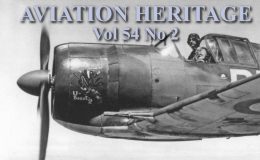
Aviation Heritage Vol. 54 No. 2 (June 2023) Contents Listing

The latest quarterly AHSA journal - Aviation Heritage - has recently been posted to members. The contents of all articles are listed below: Aviation...

Welcome to the website of the Aviation Historical Society of Australia Inc.
The AHSA is dedicated to recording and promoting Australian aviation history. We find and tell the stories of how aviation (both civil and military) has contributed to the development of Australia and the experiences of Australian people.
To navigate around the site, select from the menu bar above, click on one of the updates below or choose one of the categories below.

On this day in Australian aviation history:

1924 WGCDR Stanley Goble and FLTLT Ivor McIntyre continued their around-Australia flight in Fairey IIID A10-3 on Sunday 18 May 1924 (journey day 43, flying day 20). They left Port Lincoln at 11:06 am on the 18th of May and had a good passage to Beachport, South Australia, arriving at 2:35 pm. A bad rain squall was experienced off Kingston en route. They were met by Flt. Lt. Harman and a mechanic from Point Cook, who refuelled and checked the seaplane. Source: The First Round-Australia Flight, 1924 by Neville Parnell, AHSA Journal, vol 6, no 12, December 1965 and NAA: A9376, 92, Round Australia seaplane flight 1924 - Wing Commander Goble and Flight Lieutenant McIntyre
1978 Piper PA-39-160 Twin Comanche VH-DXA operated by Navair crashed at 11 km NNW of Dubbo, NSW on 18 May 1978. The aircraft was on a flight from Sydney to Dubbo. The aircraft cruised at an altitude of 8,500 feet. The pilot reported to Sydney radio that the aircraft passed Sofala at 2145 hours and that he was estimating Dubbo at 2229 hours. At 2111 hours the pilot advised that he had commenced descent into Dubbo. He then contacted Dubbo Flight Service Unit (KSU) and was advised that the appropriate altimeter setting was 1009 (millibars). Shortly before 2227 hours, Dubbo KSUchecked the cloud base in the area and then informed the aircraft that there were eight oktas of cloud at 1200 feet, with lower patches. The pilot reported to Dubbo KSUat 2241hours that the aircraft was over Dubbo and would be "commencing an NDB descent into Dubbo". Apparently the pilot was unable to make visual contact with the ground at the completion of this procedure and he reported at 2302 hours that he had "missed out" and would make one more attempt. At 2323 hours, in response to an enquiry by Dubbo FSU, the pilot advised that he was "running in-bound again". He called again at 2324 hours and advised that he would "go round and have one more go", adding "if I don't make it this time I'll give it away." Dubbo FSU advised the aircraft at 2329 hours that the main cloud base was now 600 feet with lower patches down to 400 feet. The pilot responded that he would come down to the minimum altitude once more and if the cloud did not break he would "give it away". At 2342 hours he advised that he was outbound for another attempt and the FSU requested that he "call again by time on the hour". The pilot acknowledged this request, and this was the last communication from the aircraft. Search and rescue procedures were implemented when the aircraft failed to respond to calls. The wreckage was found, on the following morning, in a position consistent with the aircraft having been inbound towards the NDB, near the alignment of, but approximately 1000 feet lower than, the specified descent procedure. Initial impact had taken place with a tree, whilst the aircraft was in substantially level flight. The outer panel of the port wing was torn off as a result of this contact. The aircraft rolled to the left and struck the ground inverted, then skidded into an irrigation dam approximately 300 metres south of the tree. There were 2 fatalities. Sources: ATSB; aviation-safety.net website
2009 A Tiger Airlines A320 en-route from Mackay to Melbourne experienced oscillations from aileron faults and diverted to the Gold Coast on 18 May 2009. It transpired that a similar incident on the same plane in 2008 had not been reported. In its report, the ATSB noted that the operator had not complied with the incident reporting requirements of theĀ Transport Safety Investigation Act 2003. Source: ā€˜Tiger gets rap from ATSB’,Ā Australian Aviation, October 2010, p. 34. via aph.gov.au website

A Mouse At Moresby Ansett Airways Ansett Flying Boat Services Ballarat Bellanca 28/70 Bill Bedford Boeing Brinsmead Bronco CAC CAC Boomerang CAC Ceres CAC Mustang CAC Wackett Trainer CAC Wirraway CAC Woomera Chartair Cyclone Tracy DAP DC-3 DCA DH.50 DH60 Moth Double Sunrise Duigan Memorial Lecture Eric Bonar Essington Lewis Eyre Peninsula Airways GAF Guinea Airways Halestorm JC Fitzmaurice Junkers F13 Lawrence Wackett Macchi Meteor Michael Smith Outlook Percival Proctor Qantas RAF 205 Squadron RFD Winged Target Roy Goon Sid Marshall Target towing

Site Categories:

  • AHSA Info
  • AHSA Journal
  • AHSA Meetings
  • AHSA Videos
  • Archives
  • Aviation history books
  • CAC
  • Events
  • Newsletter

Privacy Policy

Contact Us

Home

Copyright Ā© 2025 Aviation Historical Society of Australia Inc.