Skip to content
  • Home
  • AHSA
    • AHSA Inc. Meetings
    • AHSA Inc
      • AGM 2022
    • AHSA (NSW) Inc.
    • AHSA (QLD) Inc.
    • Privacy Policy
    • Disclaimer
  • Publications
    • Aviation Heritage
    • Aviation Heritage Web Archive
    • AHSA Newsletter Archive
  • Members
    • Members Only
  • Books
  • Join
  • Links
  • Store
  • Log In
    • My Membership Account
Aviation Historical Society of Australia
  • Home
  • AHSA
    • AHSA Inc. Meetings
    • AHSA Inc
      • AGM 2022
    • AHSA (NSW) Inc.
    • AHSA (QLD) Inc.
    • Privacy Policy
    • Disclaimer
  • Publications
    • Aviation Heritage
    • Aviation Heritage Web Archive
    • AHSA Newsletter Archive
  • Members
    • Members Only
  • Books
  • Join
  • Links
  • Store
  • Log In
    • My Membership Account

Tag: Avon Sabre

DerekB27/04/202204/06/2023

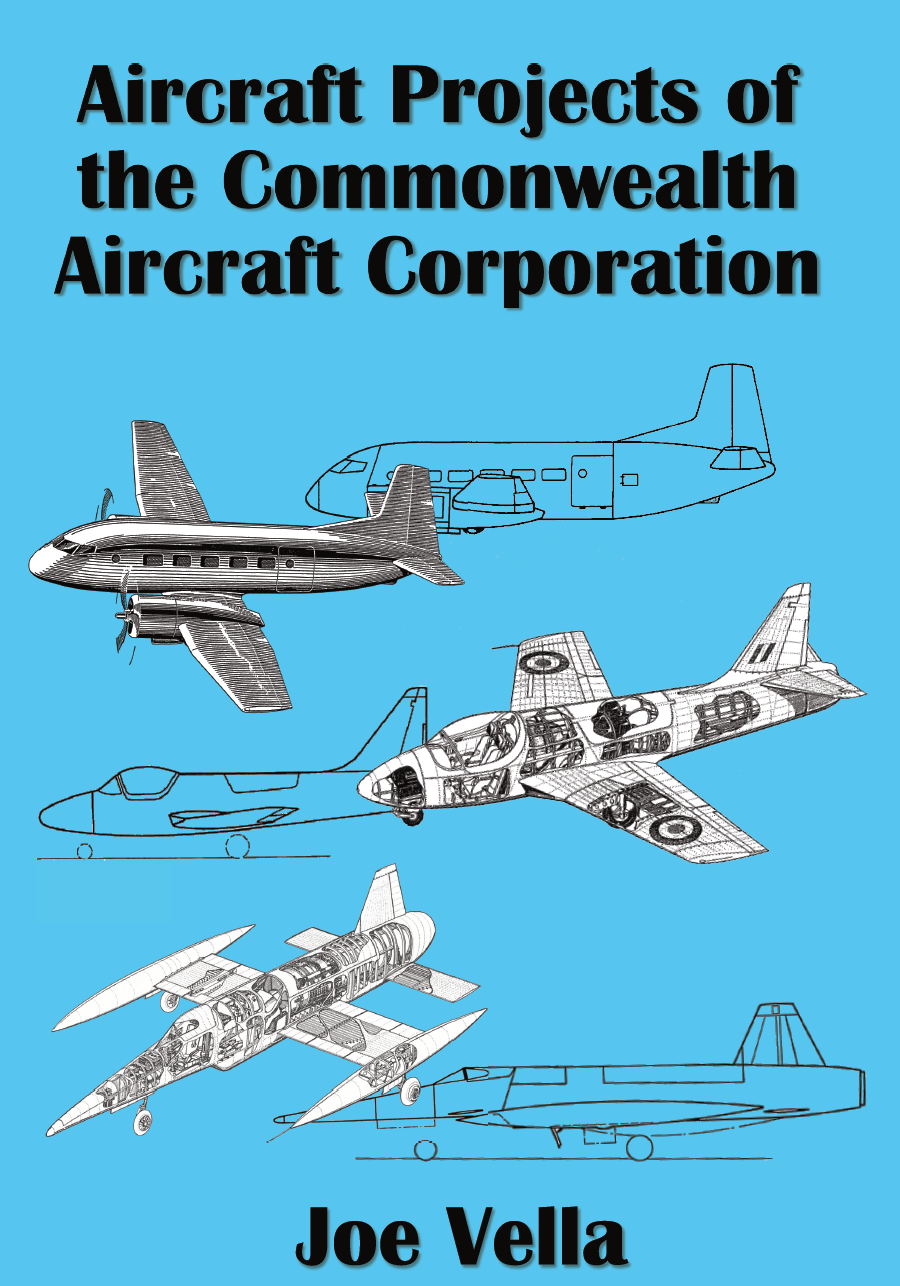
The Aircraft Projects of Commonwealth Aircraft Corporation

This new book by author and AHSA member Joe Vella has just been published (April 2022). Joe began writing this book in 1983 when...

Welcome to the website of the Aviation Historical Society of Australia Inc.
The AHSA is dedicated to recording and promoting Australian aviation history. We find and tell the stories of how aviation (both civil and military) has contributed to the development of Australia and the experiences of Australian people.
To navigate around the site, select from the menu bar above, click on one of the updates below or choose one of the categories below.

On this day in Australian aviation history:

1929 Charles Kingsford Smith, Charles Ulm, Harold Litchfield and Tom McWilliams departed from Richmond, NSW at 10:50 am on 30 March 1929 aboard the Fokker F.VIIb/3m G-AUSU "Southern Cross" heading for Wyndham, WA. This was the first leg of af planned 13-day flight to London. Ulm recorded the following entries in his log: "9.45, Flagged the runway warming the motors to 10.20, 10.45: Still on the ground. 10.50: Take off after a long run. 10,55: Air speed 82 knots, altitude 400 ft. 11: Altitude 1000 ft., air speed 80 knots. 11.12: Mac reports that the whole of the 600 metre aerial carried away when Litchfield accidentally released the aerial catch while taking the drift reading. 11.25: Altitude 3200 ft. Now approaching Singleton country. From Richmond to Singleton is mountainous and heavily timbered. Revs. now 1725, air speed 82 knots. 11.35: Altitude 3000 ft. Changed course, now on a direct course for Wyndham. 11.44: Approaching Merriwa. 11.50: Passing Merriwa. Noon: Beautiful clear sky ahead, altitude now 2000, revs. 1700 all three, air speed 79 knots. Lovely warm sun, everyone happy. 2.30: Perfect weather at 1500 ft., but bumpy, 3 o'clock: Have passed the rivers Darling and Warrego. Plenty of water in both. 3.45; Passing over the Queensland border. 4: Passing Wyara Lake, slightly south our true course. 6: Dinner, sandwiches, coffee, water, 7.25: Here we are again, night flying; quite warm and cosy at 2000 ft. Our old friends, the exhaust flames, are carrying on as usual. 10.40: Both of us been flying semi-blind since 7 o'clock. It is not better and the horizon can just be discerned. As the ground speed was very good all day have throttled all the motors back to 1550 r.p.m. and are now cruising about 73 knots. The moon should be out soon." The following day the crew made a forced landing and thus started what became known as the "Coffee Royal" affair. Sources: Parnell, N. and Boughton, T., Flypast, A Record of Aviation in Australia, Australian Government Publishing Service, Canberra, 1988; Morning Bulletin (Rockhampton, Qld), Mon 15 Apr 1929, Page 9, "LIEUTENANT ULM'S LOG"
1978 Piper PA-31-350 Chieftain VH-MBK operated by Australian Air Charters crashed 2 km north-east of Melbourne Airport, Tullamarine, Victoria on 30 March 1978. The aircraft was based at Moorabbin Airport and, late in thee afternoon of 29 March, it was refuelled and a pre-flight inspection was carried out. The pilot ferried it to Melbourne Airport just after midnight. While he was preparing and submitting a flight plan for the flight to Canberra and return, the aircraft was loaded with newspapers and a small quantity of other freight. On returning to the aircraft, the pilot checked the loading documents and the freight and made a walk around inspection of the exterior of the aircraft. The pilot started the aircraft engines and established radio communication with air traffic control at 0139 hours on 30 March. He was given a taxi clearance and an airways clearance for departure from runway 34. Upon request, he was granted approval to commence take-off from the taxiway "J" intersection, some 800 metres from the southern end of the runway. He reported "ready" at 0143 hours and was immediately given a clearance for take-off. The aircraft commenced to take-off, became airborne and, when it was at a height of 100 to 200 feet above the intersection of the two runways, the pilot advised "got a fire - fire in the, ah, starboard engine and, ah, doing a low circuit request two seven". Air traffic control immediately replied "make visual approach runway two seven clear to land". Acknowledgement of this clearance was the last communication received from the aircraft. As the aircraft passed over the northern end of runway 34 it commenced a turn to the right and gradually descended. It struck the ground in a right wing down attitude on a track of 070° magnetic and an intense fire broke out. The accident site was 1.8 kilometres to the north-east, and 88 feet above the elevation, of the northern end of runway 34. It was established that as a result of excessively lean mixture operation, there was a hole burned through the piston rings and into the side of the No. 2 piston of the right engine. There was no evidence of fire within the engine but it was apparent that the hole in the piston had resulted in pressurisation of the crankcase cavity, ejection of the oil dipstick and the consequent venting of oil from the dipstick orifice and the engine breather pipe on to the exterior of the exhaust pipes. The engine had the capacity to continue to produce a substantial amount of power for a limited period. Source: ATSB
1982 Cessna 172M VH-IQY operated by Milo Pastoral Co. Ltd crashed at near Adavale, QLD on 30 March 1982. The aircraft was working in conjunction with a number of stockmen on horses or motorcycles to muster cattle some 20 km northwest of the station homestead. At about 1040 hours, the aircraft made a number of steep dives to tree-level, apparently to move cattle adjacent to a creek. After the last dive, it was observed to pullup to an estimated height of 400 feet, then stall and dive to the ground. There were 2 fatalities and the aircraft was destroyed. Source: ATSB
1995 The Civil Aviation Legislation Amendment Bill 1995 and Air Services Bill 1995 was introduced to Parliament on 30 March 1995. Comment was sought from the House committee inquiry on aviation safety. Source: Minister for Transport News Release T15/95; House of Representatives, Debates, 30 March 1995, p. 2598; Senate Debates, 21 September 1995 p. 1225. via aph.gov.au website
2011 Piper PA-32R-301T Turbo Saratoga SP VH-LKI crashed about 1km from Moree Airport, New South Wales on 30 March 2011. The aircraft, with a pilot and five passengers on board, was returning to Moree Airport from Brewarrina Airport, New South Wales under the night Visual Flight Rules (NVFR). The aircraft flew overhead the airport at about 2000 Eastern Daylight-saving Time before the pilot conducted a left circuit for landing on runway 19. Witnesses observed the aircraft on a low approach path as it flew toward the runway during the final approach leg of the circuit. The aircraft contacted trees and collided with level terrain about 550 m short of the runway 19 threshold. The pilot and three passengers were fatally injured. Two other passengers, who were seated toward the rear of the aircraft, were seriously injured. The aircraft was seriously damaged by the impact forces. The investigation did not identify any organisational or systemic issues that might adversely affect the future safety of aviation operations. However, the pilot did not satisfy the recency requirements of his NVFR rating and the aircraft's take-off weight was in excess of the maximum allowable for the aircraft. In addition, the aircraft's centre of gravity was probably outside that specified in the aircraft flight manual, with the potential to significantly diminish the aircraft's in-flight performance and pitch stability. Source: ATSB
2020 As COVID-19 impacts significantly weakened travel demand, Virgin Group temporarily suspend international flying from 30 March to 14 June 2020, and closed all Virgin Australia operated lounges across the network. Virgin Australia CEO and Managing Director Paul Scurrah said, “There has never been a travel environment in Australia as restricted as the one we see today and the extraordinary steps we’ve taken have been in response to the federal and state governments’ latest travel advice. “We are now facing what will be the biggest grounding of aircraft in this country’s history. From the end of this week, we will begin repositioning and grounding more than 125 aircraft in our fleet, suspending almost all our domestic and international flying until at least the middle of June." Source: Virgin Australian newsroom

A Mouse At Moresby Ansett Airways Ansett Flying Boat Services Ballarat Bellanca 28/70 Bill Bedford Boeing Brinsmead Bronco CAC CAC Boomerang CAC Ceres CAC Mustang CAC Wackett Trainer CAC Wirraway CAC Woomera Chartair Cyclone Tracy DAP DC-3 DCA DH.50 DH60 Moth Double Sunrise Duigan Memorial Lecture Eric Bonar Essington Lewis Eyre Peninsula Airways GAF Guinea Airways Halestorm JC Fitzmaurice Junkers F13 Lawrence Wackett Macchi Meteor Michael Smith Outlook Percival Proctor Qantas RAF 205 Squadron RFD Winged Target Roy Goon Sid Marshall Target towing

Site Categories:

  • AHSA Info
  • AHSA Journal
  • AHSA Meetings
  • AHSA Videos
  • Archives
  • Aviation history books
  • CAC
  • Events
  • Newsletter

Privacy Policy

Contact Us

Home

Copyright © 2025 Aviation Historical Society of Australia Inc.