Skip to content
  • Home
  • AHSA
    • AHSA Inc. Meetings
    • AHSA Inc
      • AGM 2022
    • AHSA (NSW) Inc.
    • AHSA (QLD) Inc.
    • Privacy Policy
    • Disclaimer
  • Publications
    • Aviation Heritage
    • Aviation Heritage Web Archive
    • AHSA Newsletter Archive
  • Members
    • Members Only
  • Books
  • Join
  • Links
  • Store
  • Log In
    • My Membership Account
Aviation Historical Society of Australia
  • Home
  • AHSA
    • AHSA Inc. Meetings
    • AHSA Inc
      • AGM 2022
    • AHSA (NSW) Inc.
    • AHSA (QLD) Inc.
    • Privacy Policy
    • Disclaimer
  • Publications
    • Aviation Heritage
    • Aviation Heritage Web Archive
    • AHSA Newsletter Archive
  • Members
    • Members Only
  • Books
  • Join
  • Links
  • Store
  • Log In
    • My Membership Account

Outlook AHSA Newsletter November 2023

DerekB30/11/202327/12/2023
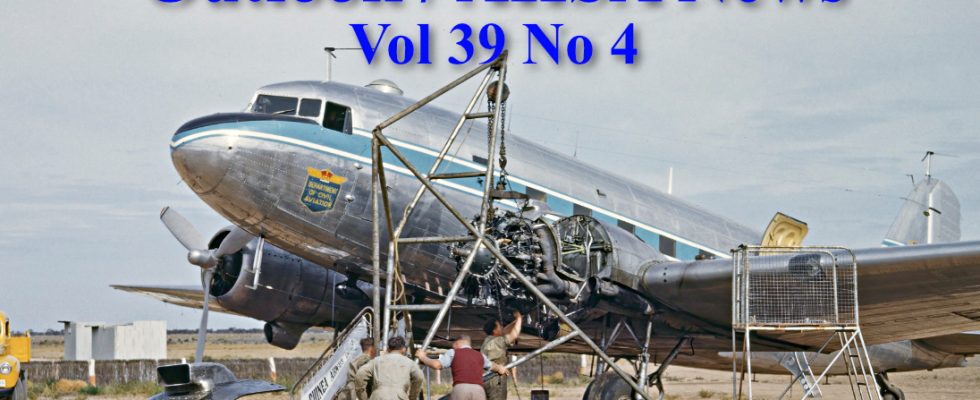
Outlook / AHSA News cover splash Nov 2023

The November 2023 edition of Outlook / AHSA News was distributed to members recently.

This edition can be read online in the viewer below.

Click here to view fullscreen (opens in new tab)


  • Twitter
  • Facebook
  • Google+
  • Linkedin
  • Email
Posted inNewsletter
Tagged BroncoDCAHalestormMacchiMeteorQantas

Welcome to the website of the Aviation Historical Society of Australia Inc.
The AHSA is dedicated to recording and promoting Australian aviation history. We find and tell the stories of how aviation (both civil and military) has contributed to the development of Australia and the experiences of Australian people.
To navigate around the site, select from the menu bar above, click on one of the updates below or choose one of the categories below.

On this day in Australian aviation history:

1942 Number 7 Aircraft Depot (7AD) became the second unit to be established at RAAF Station Tocumwal on 2 December 1942. 7AD would become the largest and longest serving unit at Tocumwal. 7AD was formed in Corowa in May 1942 and relocated to Tocumwal following the takeover of the Tocumwal Air Depot from the United States Army Air Corps. Number 7 Aircraft Depot was responsible for the maintenance, repair and modification of all aircraft and aircraft components operated by the RAAF during WW2. At its peak, 7AD had an establishment of over 2,100 personnel including over 100 female technicians of the WAAAF. Source: Tocumwal Aviation Museum
1942 Consolidated B-24A Liberator 41-23762 "Little Eva" operated by United States Army Air Forces (USAAF) crashed near the Burriejella waterhole, Queensland on 2 December 1942. The aircraft was returning from a mission against a Japanese troop convoy on Papua New Guinea on 2 December 1942. "Little Eva" lost touch with the other aircraft on the mission and attempted to return to base at Iron Range alone. A severe thunderstorm disabled the radio, resulting in the crew losing their bearings and the aircraft finally ran out of fuel. Lieutenant Norman Crosson, the pilot, gave orders to bail out. Most of the crew members parachuted to safety, however one was killed when his parachute snagged on the aircraft and another who did not jump was killed when the plane crashed at about 2:45am near the Burriejella waterhole. Although the crew had been instructed to rendezvous at the wreckage only two men including the pilot made it back to the crash-site and from there subsequently walked back to civilisation after 12 days in the bush. Of the other group of four men, only one survived. Staff Sargeant Grady Gaston was only found after an amazing one hundred and fifty day odyssey through the barren north Queensland landscape, one of the longest survival treks in history. There were 6 fatalities. Source: Australia @ War website; aviation-safety.net website
2005 Boeing 737-7Q8 VH-VBC operated by Virgin Blue, suffered a windscreen failure on a scheduled passenger flight from Townsville to Brisbane on 2 December 2005. While the aircraft was passing flight level 370 on climb, the crew heard a 'bang', which was closely followed by the annunciation of a Window Overheat master caution. After becoming aware that the outer layer of the pilot in command's L1 window was cracked, the crew followed the checklist for window damage. As a result, at about 2106 Eastern Standard Time, a cabin altitude warning horn sounded. The sounding of the warning horn was the normal result of the crew's implementation of the checklist for window damage. However, the flight crew believed that the aircraft was depressurising as a result of the window damage and responded to the cabin altitude warning by carrying out an emergency descent from 33,000 ft to 10,000 ft. During the descent, the crew closed the valve that controlled the outflow of air from the aircraft. However, the pressurisation system was functioning normally and closing the outflow valve caused the aircraft to exceed its cabin pressure limit, as a result of which the over-pressure safety relief valves opened. The flight crew realised that the aircraft was not depressurising, but pressurising, and opened the outflow valve. The combined action of the crew and the automatic opening of the safety relief valves reduced the cabin pressure at a rate greater than that which passengers normally experience. As a result, 11 passengers sustained minor injuries. Source: ATSB
2021 New basic operating rules for all pilots in Australia (except drone pilots) came into force on 21 December 2021. Part 91 of the Civil Aviation Safety Regulations (CASR) – General operating and flight rules, sets out the general operating rules for all pilots and operators. Part 91 consolidated all of the general operating and flight rules for Australian aircraft. The new rules covered: documentation, flight crew and operator obligations, training, crew member obligations, safety of persons and cargo, classifications of operation, rules to prevent collision, communication, fuel, pre-flight planning and preparation, ground operations, aircraft performance and weight and balance, take-off and landing, cruising levels and minimum heights, navigation, non-controlled aerodromes, icing, special flight operations, aircraft equipment, special certificates and permits, foreign aircraft, minimum equipment list and equipment. Source: https://www.casa.gov.au/search-centre/rules/part-91-casr-general-operating-and-flight-rules

Ansett Flying Boat Services Ballarat Beaufighter Bellanca 28/70 Bill Bedford Boeing Brinsmead Bronco CAC CAC Boomerang CAC Ceres CAC Mustang CAC Wackett Trainer CAC Wirraway CAC Woomera Chartair Cyclone Tracy DAP DC-3 DCA DH.50 DH60 Moth Duigan Memorial Lecture Eric Bonar Essington Lewis Eyre Peninsula Airways GAF Guinea Airways Halestorm JC Fitzmaurice Junkers F13 Lawrence Wackett Macchi Meteor Michael Smith Outlook Percival Proctor Qantas RAF 205 Squadron RFD Winged Target Roy Goon Sid Marshall Smithy (movie) Supermarine Southampton Target towing

Site Categories:

  • AHSA Info
  • AHSA Journal
  • AHSA Meetings
  • AHSA Videos
  • Archives
  • Aviation history books
  • CAC
  • Events
  • Newsletter

Privacy Policy

Contact Us

Home

Copyright © 2025 Aviation Historical Society of Australia Inc.