Skip to content
  • Home
  • AHSA
    • AHSA Inc. Meetings
    • AHSA Inc
      • AGM 2022
    • AHSA (NSW) Inc.
    • AHSA (QLD) Inc.
    • Privacy Policy
    • Disclaimer
  • Publications
    • Aviation Heritage
    • Aviation Heritage Web Archive
    • AHSA Newsletter Archive
  • Members
    • Members Only
  • Books
  • Join
  • Links
  • Store
  • Log In
    • My Membership Account
Aviation Historical Society of Australia
  • Home
  • AHSA
    • AHSA Inc. Meetings
    • AHSA Inc
      • AGM 2022
    • AHSA (NSW) Inc.
    • AHSA (QLD) Inc.
    • Privacy Policy
    • Disclaimer
  • Publications
    • Aviation Heritage
    • Aviation Heritage Web Archive
    • AHSA Newsletter Archive
  • Members
    • Members Only
  • Books
  • Join
  • Links
  • Store
  • Log In
    • My Membership Account

Tag: IPEC Aviation

DerekB03/06/202306/06/2023

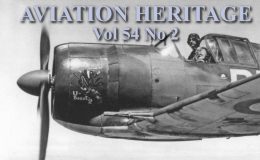
Aviation Heritage Vol. 54 No. 2 (June 2023) Contents Listing

The latest quarterly AHSA journal - Aviation Heritage - has recently been posted to members. The contents of all articles are listed below: Aviation...

Welcome to the website of the Aviation Historical Society of Australia Inc.
The AHSA is dedicated to recording and promoting Australian aviation history. We find and tell the stories of how aviation (both civil and military) has contributed to the development of Australia and the experiences of Australian people.
To navigate around the site, select from the menu bar above, click on one of the updates below or choose one of the categories below.

On this day in Australian aviation history:

1940 Lockheed Hudson Mk II A16-97 operated by 2 Squadron RAAF crashed at Canberra, ACT on 13 August 1940. Based at Laverton, A16-97 was the first RAAF Hudson to be fitted with passenger seating and was tasked with flying James Fairbairn, the Minister for Air and Civil Aviation from Melbourne to Canberra for a cabinet meeting. In addition to the RAAF crew of four (pilot FLTLT Robert Edward Hitchcock, PLTOFF Richard Frederick Wiesener, CPL John Frederick Palmer and AC1 Charles Joseph Crosdale), Fairbairn invited three other senior officials to join him on the flight – Geoffrey Street, Minister for the Army; Henry Gullett, Minister for Information, and General Brudenell White, Chief of the General Staff. Fairbairn's private secretary Dick Elford and White's staff officer Frank Thornthwaite were the two other passengers. The Perth Daily News reported: "The plane was seen by watchers at the Canberra Aerodrome and the Air Force station to circle the drome, and then rise and head south. It disappeared behind a low tree-dotted hill. There was an explosion and a sheet of flame, followed by a dense cloud of smoke... The Canberra Fire Brigade and ambulances from Canberra and Queanbeyan, across the border in New South Wales, as well as several Air Force tenders, arrived soon afterwards and fire extinguishers were played on the blazing wreckage. After about half-an-hour, when the blaze had died down, it was seen that the entire undercarriage, wings and structural supports of the plane had been torn away and were a smouldering mass in which were the charred bodies of those on board." The Court of Inquiry into the accident found that it was most likely from the aircraft stalling on its landing approach, resulting in loss of control at a height too low to recover. Sources: aviation-safety.net website; Hazlehurst, Cameron (2013). Ten Journeys to Cameron's Farm: An Australian Tragedy. Canberra: ANU E Press. ISBN 9781925021011
1989 Kavanagh E-260 VH-NMS operated by Toddy's Ballooning crashed 14 km SSE of Alice Springs Airport, NT on 13 August 1989 after a collision with another balloon. Five hot air balloons, including the two involved in the collision, VH-NMS and VH-WMS, were operating tourist charter flights from the same launch area. Flight plans had been submitted and correctly co-ordinated. All the balloons were ready at about the same time and took off within minutes of each other. VH-WMS was airborne about two minutes ahead of VH-NMS. The pilot of VH-WMS then requested an Airways Clearance for both his aircraft and VH-NMS. A clearance was issued for them to operate in the Alice Springs Control Zone not above 4000 feet. VH-WMS acknowledged for both aircraft. This clearance did not make specific reference for them to operate as a formation, but to operate in company. VH-WMS climbed to 4000 feet (2000 feet above ground level) and drifted in a westerly direction. Witness evidence revealed that the pilot did not use the burner for a considerable period of time while pointing out places of interest to the passengers. A video film taken from another balloon indicates that VH-WMS appeared to be descending at this time, while VH-NMS was climbing to follow it. During the climb the pilot of VH-NMS would have lost visual contact with VH-WMS due to his envelope causing a blind area above. VH-WMS was not fitted with the mandatory instrument package, without which the pilot would have been unable to accurately ascertain his altitude or judge his vertical movement. The pilot was wearing a wrist altimeter. Several of the passengers in VH-WMS had noted that the other balloon, VH-NMS, was below and climbing towards them from the east. They reported that it seemed to close on them at a fast rate until its envelope struck their basket. Evidence indicates that neither of the pilots were in contact with one another. Both balloons were equipped with UHF (Ultra High Frequency) radios operating on the same frequency. The basket of VH-WMS contacted the envelope of VH-NMS just below the velcro rip panel, tearing a hole in the fabric panel, which was under tension from containing the large mass of hot air within the envelope. Tearing continued through adjacent panels and seams, creating a hole large enough for the basket of VH-WMS to enter and proceed more than half way down into the interior of the envelope. At the point where the basket of VH-WMS moved inside the envelope, it would have contacted and fouled against the control lines for the velcro rip panel vent, initiating activation of the rip panel Capewell safety locks, and as it moved further inside would have contacted the control line for the parachute vent. The parachute vent line remained fouled around the outboard end of the basket of VH-WMS as it swung clear of the hole in the envelope of VH-NMS. This caused the velcro rip panel to fully open as the two balloons separated. VH-NMS then descended as hot air escaped through the damaged envelope panels and opened velcro rip panel, causing the envelope to elongate and rapidly collapse. The degree of disruption of the envelope was such that the balloon could not remain inflated. The basket, with the deflated envelope trailing above it, then plummeted to the ground. There were 13 fatalities. Sources: ATSB; aviation-safety.net website

A Mouse At Moresby Ansett Airways Ansett Flying Boat Services Ballarat Bellanca 28/70 Bill Bedford Boeing Brinsmead Bronco CAC CAC Boomerang CAC Ceres CAC Mustang CAC Wackett Trainer CAC Wirraway CAC Woomera Chartair Cyclone Tracy DAP DC-3 DCA DH.50 DH60 Moth Double Sunrise Duigan Memorial Lecture Eric Bonar Essington Lewis Eyre Peninsula Airways GAF Guinea Airways Halestorm JC Fitzmaurice Junkers F13 Lawrence Wackett Macchi Meteor Michael Smith Outlook Percival Proctor Qantas RAF 205 Squadron RFD Winged Target Roy Goon Sid Marshall Target towing

Site Categories:

  • AHSA Info
  • AHSA Journal
  • AHSA Meetings
  • AHSA Videos
  • Archives
  • Aviation history books
  • CAC
  • Events
  • Newsletter

Privacy Policy

Contact Us

Home

Copyright © 2025 Aviation Historical Society of Australia Inc.